Showing posts with label Whitewashing. Show all posts

Thursday, September 10, 2009

More news of NMT Medical MIST Trial - false declarations

More news on the scientific jiggery pokery that took place in the MIST trial paid for by NMT Medical, and some emerging news on the usual attempts at cover-up in this case. Authors denied data, colluding journals, and collusion of the UK regulator (the MHRA) with scientific misconduct. More of the same old story and Déjà vu all over again.

The only chink of light - that there are still great journalists (like Shelley Wood) doing the job that the mainstream medical journals, regulators and leadership of medicine are manifestly failing to do. Well done Shelley.

The Heartwire article of yesterday is reproduced intact below. For my collated postings on this scandal click here

MIST correction published; no new information on disputed echo review for PFO/migraine trial
Sep 9, 2009
Shelley Wood
Heartwire


Dallas, TX - Authors of the controversial Migraine Intervention with STARflex Technology (MIST) trial paper [1] in Circulation have now published a lengthy correction [2] to the manuscript that originally appeared online in March 2008. As previously reported by heartwire, journal editors requested a correction from the authors after questions were raised—most notably by one of the original investigators for MIST—about details purportedly missing from the publication.

The correction by Dr Andrew Dowson (Kings College Hospital, London, UK) and colleagues appeared online Monday August 31, 2009, and the online version of the article has been updated to reflect the changes.

MIST was the first randomized, sham-controlled trial to investigate patent foramen ovale (PFO) closure as a treatment for migraine; the study failed to show a benefit of PFO closure. Garnering even more attention than the study results, however, have been questions from physicians both within and outside of the study about the design and conduct of the study and the airing of its results. The study sponsor, NMT Medical, is currently suing one of the original co-PIs for MIST, Dr Peter Wilmshurst (Royal Shrewsbury Hospital, UK), for concerns he raised to heartwire about how MIST data were being managed.

The disputed echo reviews

Wilmshurst, along with his Shrewsbury Hospital colleague Dr Simon Nightingale, refused to sign off on the manuscript before it was submitted for publication and are not included as authors. Following the publication of MIST in Circulation, Wilmshurst contacted the journal about his concerns.

Conspicuously absent from the correction is information about an "off-protocol" review of the echocardiographic information that suggested a higher residual shunting rate following PFO closure than that reported by Dowson at the TCT 2007 meeting. Dowson reported a 94% closure rate—derived, as per trial protocol, from the follow-up conducted by the implanting cardiologist. Wilmshurst, however, says he conducted an after-the-fact review of echocardiograms, at NMT's behest, which suggested residual shunting in approximately one-third of patients. A residual shunt can point to either incomplete device closure of the PFO or to the presence of pulmonary shunts not properly identified at baseline.

Both Dowson and NMT originally denied to heartwire that this echo review had ever taken place (repeatedly insisting that it was not part of the trial protocol) and rejected Wilmshurst's suggestion that NMT had asked investigators to send their echos to him to review. Another trial investigator, however, Dr Michael Mullen (Royal Brompton Hospital, London, UK), subsequently confirmed to heartwire that a review had indeed been undertaken but insisted the information did not belong in the MIST paper.

Asked by heartwire why information about the disputed echo review is not mentioned in the correction, Circulation issued a statement saying, "The Circulation editors were unaware of this controversy during the review of the paper; however, they investigated the matter at the same time that they investigated Dr Wilmshurst's other claims, and they decided that this information did not belong in the paper."

Also contacted by heartwire, Wilmshurst responded with a written statement:

"The correction of the MIST paper states that I did not sign the Copyright Transfer Agreement because of an internal disagreement about the conduct of study. In an email to Dr Dowson in October 2007, I gave two reasons for refusing to sign the Copyright Transfer Agreement. First, that the paper contained errors, which are confirmed by this correction. Second, that I could not in conscience sign the declaration, [which reads] 'The authors had full access to the data and take responsibility for its integrity.' To sign a declaration knowing it to be false would make me guilty of a criminal offence in the United Kingdom. In November 2007, NMT's lawyer wrote to me: 'No investigator is given a full detailed set of all the data.' For 18 months I pressed Circulation for a correction. I sent the editor hundreds of pages of documents, including a copy of my email to Dr Dowson. All of the errors and omissions in the correction are ones that I reported to Circulation, but not all errors and omissions that I reported have been corrected. In addition, the contributions of some who did little in the study, including an 'author' who died in May 2004, before the trial started, are credited, but the contributions of Dr Nightingale and I, who helped design the trial, were members of the steering committee, wrote the early draft of the paper, and did over 600 of the 2000 patient visits in the trial, are not acknowledged."

NMT chief financial officer Richard Davis, also commenting on the correction for heartwire, emphasized that the "clarifications were made on request of the editors of the journal.

"The correction that appears in the journal Circulation includes a single error in the reference to a histogram contained in the original manuscript. No changes to the results, analysis, or conclusions of the study are made. The remainder of the published correction contains clarifications, many of which were not included in the original manuscript due to the word-count limitations.

"To comply with these word-count requirements, the manuscript focused specifically on the critical elements of the trial design and results. All serious adverse events were listed; other information was excluded that was deemed irrelevant to the findings regarding the effect of PFO closure on migraine. One procedural embolization in a cohort of 74 patients is not uncommon for these types of devices, and retrieval of a device due to poor positioning followed by replacement with a second device, as happened in two cases, is also not unusual. It is important to note that these procedural difficulties were not considered serious by the investigator or the safety committee of the study."

Clearing the MIST

The correction runs over 700 words long, with a four-page data supplement, and addresses what Dowson and colleagues term "a number of errors and omissions," including:
  • An explanation of why Wilmshurst and Nightingale were not listed as authors.
  • An expanded description of how intracardiac shunts were assessed.
  • Clarification on specific adverse events related to failure to find or cross a PFO, two cases of device embolization, and one nondeployment.
  • New information on patients who withdrew from the study and why.
  • A correction to the units used for number of migraine days per month for Figure 3.
  • Reiteration of the reasons for excluding two patients from an analysis looking at median total migraine days and the calculations used.
  • Clarification that the authors' conflicts of interest information provided in the article was accurate.
To this last point, the correction states: "The authors confirm that they disclosed all relevant relationships and potential conflicts of interest that were present during the two years leading up to manuscript submission, as required by the American Heart Association." The Circulation manuscript itself notes that two study authors—Mullen and Dr David Hildick-Smith (Brighton and Sussex University Hospitals NHS Trust, UK) have ownership interests in NMT Medical and that Mullen has received teaching honoraria and has acted as a consultant to NMT, but that the remaining authors report no disclosures.

Of note, at the time of Dowson's October 2007 TCT presentation, he disclosed that he had received grant/research support from NMT, and Davis estimated in an interview with heartwire shortly after Dowson's presentation that up to 10 study investigators and/or steering committee members had received consulting fees from the company. Wilmshurst once told heartwire that he and Nightingale had turned down offers for "large" consultancy payments from NMT.
  1. Dowson A, Mullen MJ, Peatfield R, et al. Migraine Intervention with STARFlex Technology (MIST) trial. A prospective, multicenter, double-blind, sham-controlled trial to evaluate the effectiveness of patent foramen ovale closure with STARFlex septal repair implant to resolve refractory migraine headache. Circulation 2008; 117:1397-1404.
  2. Correction for Dowson et al. Circulation 2009; DOI: DOI: 10.1161/CIRCULATIONAHA.109.192626. Available at: http://circ.ahajournals.org.

Earlier|Later|Main Page

Monday, August 17, 2009

Sitting leaders ask you to stand up for safety

Here is an excellent letter in the British Medical Journal (18 July 2009; 339:124).


The same letter in text format (minus references) is below:

Sitting leaders ask you to stand up for safety


If junior doctors follow the recommendation of medical leaders and stand up for the safety of patients will they receive support from those leaders? (1)

“Staff concerns about safety at Mid Staffordshire trust were ‘lost in a black hole.’” (2) The evidence suggests that whistleblowers who report concerns are treated no better in the NHS now than at the time of the scandal at Bristol Royal Infirmary. (3) Medical leaders are responsible for the culture of silence. To become a medical leader one needs to compromise principles for expediency to meet the demands of politicians (in an organisation or government) with the power to advance or destroy a career. Medical leaders lack moral authority because few of them have taken the risk of speaking out on their way to the top. They are too often complicit in concealment of problems to protect their organisations or political masters.(4)

Fiona Godlee spoke at the conference and represented the BMJ.(1) The BMJ has removed from its website articles that have appeared in the paper journal purely to avoid the risk of the journal being sued for libel. The articles have not been retracted because there are no grounds for retraction of truthful reports. Does the BMJ want junior doctors to take the risk of losing their careers by speaking out when it is afraid of the financial cost of speaking?

Liam Donaldson also spoke at the conference.(1) I have had correspondence and meetings with the chief medical officer to discuss misconduct by doctors, but I am left with the impression that he is unwilling or unable to act when the allegations involve senior medical leaders. Yet Sir Liam wants junior doctors to be brave enough to speak about problems.

The motivational speeches of medical leaders to junior doctors seem to be like the pep talks of generals to soldiers at the Somme before the troops went over the top and the leaders returned to their chateau for lunch. Medical leaders must now lead from the front and share the risks.

Peter T Wilmshurst
Consultant cardiologist
Royal Shrewsbury Hospital
Shrewsbury SY3 8XQ

Earlier|Later|Main Page

Tuesday, May 27, 2008

The bystander effect: would you stop for Britney Begonia?

Local 6, a Florida TV station has been conducting a series of experiments on the bystander effect.

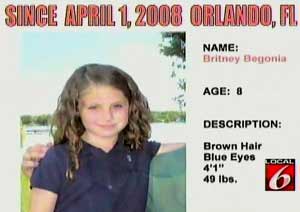
In the latest "missing child experiment" they placed numerous posters in a mall with photographs of a missing 8 year old "Britney Begonia". Britney herself sat next to some of the signs. Hundreds of people walked past and saw the posters, but only two stopped to ask Britney anything. Many bystanders questioned later said they noticed the strange resemblance between Britney and the poster but were "fearful of getting involved."

An earlier Local 6 experiment involved a fake burglar breaking into a home. See also this publication on the bystander response to a mock casualty involving arterial bleeding.

The bystander effect has been extensively studied. The more people who observe an event, the less likely it is that anyone will intervene to help. Observers assume that someone else will do something and they feel less responsible. The obviousness of the problem makes little difference.

This is something that will be familiar most people who have tried to raise problems in science and in medicine. It is the underlying message of at least a dozen E-mails I get each week. Local academic colleagues very rarely engage with problems that go right to the heart of what it is to be an academic (or a doctor). They are happy to allow principles to be ignored, patients to be abused and for those raising concerns to be bullied into unemployment or even suicide. The silence and collusion with misconduct and fraud extends to professional regulatory bodies, drug regulators and government. It is hardly surprising concerns are never raised until it is too late.

Here is a selection of quotes about collaborators, bystanders and the shame of all those who fail to speak, and who fail to ask questions.

Science may have found a cure for most evils; but it has found no remedy for the worst of them all - the apathy of human beings.
Helen Keller

Truth is not only violated by falsehood; it may be equally outraged by silence.
Henri Frederic Amiel

To assist Enron all they had to do is to do nothing, and they did nothing very well

He who passively accepts evil is as much involved in it as he who helps to perpetuate it.
Martin Luther King, Jr

Our lives begin to end the day we become silent about things that matter.
Martin Luther King, Jr.

What luck for the rulers that men do not think.
Adolph Hitler

And the multitude was silent, not a voice, not a sound was heard upon the hillsides, across the valleys where they stood.
Richard Bach, Illusions

To sin by silence when they should protest makes cowards of men.
Abraham Lincoln

There is no shame in not knowing; the shame lies in not finding out.
Russian proverb

A society of sheep must in time beget a government of wolves.
Juvenal

The average age of the world's greatest civilizations has been two hundred years. These nations have progressed through this sequence: From bondage to spiritual faith; from spiritual faith to great courage; from courage to liberty; from liberty to abundance; from abundance to selfishness; from selfishness to complacency; from complacency to apathy; from apathy to dependence and back into bondage.
Fraser Tyler

You may never know what results come from your action. But if you do nothing, there will be no results.
Gandhi

The world is a dangerous place to live; not because of the people who are evil, but because of the people who don't do anything about it.
Albert Einstein

Earlier|Later|Main Page

Thursday, November 08, 2007

Memory Hole (4 November): What happened this day

Scientific Misconduct Blog Memory Hole: Events of November 4th

hat tip

19 years ago today: If you won't supply raw data we won't publish

This is about the status of raw data (Hat Tip - Al Higgins). On this day, 4 November 1988, the Editor of the journal Cell (Benjamin Lewin) stated that it is the policy of Cell that if authors are unwilling to share raw data, they should not publish (in Cell or presumably anywhere).

It is hard to know why anyone honest would disagree. Presumably we agree that a large part of the research published by the pharmaceutical industry should not be published either, and is not science in the conventional sense.

What made Lewin's statement odd was that Cell had published the infamous paper by Baltimore, et. al. in 1986. When asked by concerned scientists to supply the raw data, Baltimore et al., refused.

Bowledge, Tabitha M. "Getting Serious About Fraud and Misconduct," AAAS Observer, Science supplement (4 November 1988), pp. 1ff.

19 years ago today: The Phillip Berger case

On 4 November 1988 it was reported that a Stanford Inquiry had cast doubt on 11 papers. Very prominent scientist Phillip Berger was involved. He had resigned in May 1987.

Stanford had earlier been criticized for sham internal procedure, delay, secrecy and attempts to minimize the problem. More to follow.

"Stanford Inquiry Casts Doubt on 11 Papers," Science 242, 4 Nov 1988

9 years ago today: Chris Chapman died

On 4 November 1998 Dr Chris Chapman, a biochemist in Leeds (UK) died at age 56 after drawing attention to serious research fraud and financial misconduct at Leeds University. The persistent but failed internal attempts at whitewashing had taken their toll. He was also dismissed (one day before he could legally receive an employer's pension).
See: Earlier post

1 years ago today: Angry whistleblowing doctor fired

I have included this mainly for the quotation. On this day, 4 November 2006 a news report discussed the plight of "whistleblower" Dr Phillip O'Dowd who had dared to discuss financial fraud involving the CEO of a US hospital. He was fired. The CEO (Robert Urcuioli) was later convicted of fraud.

In the article O'Dowd relates that the cited reason for his firing was "anger-management problems". Asked whether he had anger issues, he said:

'I did have anger-management problems. I was very angry at the management.'

Earlier|Later|Main Page

Saturday, October 27, 2007

Memory Hole (27 October): What else happened?

Scientific Misconduct Blog Memory Hole: Events of October 27th

Quote of the day

"Much of what passes for government policy today is nothing more than theater designed to create the illusion that the nation's problems are being addressed."

"We're looking for the illusion of due diligence, Mr. Pope. Two criminal acts successfully prosecuted -- it gives us that illusion."

From the Movie Syriana (worth watching)

P&G telephone records

16 years ago today: P&G in another spying case

On 27 October 1991 the New York Times reported on a further incident involving spying by Procter and Gamble.

Phone records were at the center of the scandal. P&G had tried to find who was talking to a journalist by enlisting the Cincinnati police who checked the records of all 800,000 business and home phones.

Legal scholars said First Amendment protections had been violated by accessing thousands of phone records of people who had nothing to do with the company. Procter & Gamble admitted it made "a mistake."

Another case is also discussed where a chemist at the Hanford nuclear store started speaking out about safety problems, and was intimidated and threatened.

See also Procter and Gamble goes dumpster diving

Source: "Sometimes, the Disloyal Are Watched" New York Times, 27 Oct 1991, pE10.

6 years ago today: UK Government says whistleblowing laws are "effective"

On 27 October 2001 "The UK government has acted to dispel fears that NHS staff who report safety concerns may not be protected from reprisals under whistleblowing laws". In the case of Steve Bolsin, "Professor Ian Kennedy said that the "good faith" requirement was problematic because it could easily be argued that the whistleblower acted from mixed motives". "He suggested, for example, that the act might be amended to protect disclosures to the General Medical Council (GMC)".

Hmmmmmm....yes and no .... why would anyone report anything to the GMC? Have the people who say these things spoken to a selection of people who have tried?

Sadly the lay press and public discussion remains the most important and only plausible route for raising concerns of public interest. That was 2001 and things are just much worse.

It's an interesting word that -- "effective".

Law is effective in protecting whistleblowers, report says -- Dyer 323 (7319): 954 -- BMJ

3 years ago today: Legal rules in UK prevent whistleblowing

On 27 October 2004 The UK government faced a row with MPs over new rules for employment tribunals which keep whistleblowing claims over corruption and fraud secret regardless of public safety. The rule change was slipped in on the quiet. The government creates rules ostensibly to protect whistleblowers, and then subverts them to prevent discussion. New Labour democracy in action.

Source: The Guardian, Row over keeping whistleblowing claims under wraps, Oct 27 2004

2 years ago today: 9/11 Intelligence officer bullied

On 27 October 2005 The Hill reported on the case of US Army Reserve Lt. Col. Anthony Shaffer who let it be known that the intelligence cell in which he worked identified the Sept. 11 terrorists a year before the attacks, and that related documents had been destroyed.

In exchange the pentagon disciplined him for a series of actions (from misuse of government property to flashing military identification while intoxicated) which had nothing to do with the information he provided. The path to obfuscation is interesting.

Source: The Hill, "Hunter asks for probe of Pentagon actions against whistle-blower" Oct 27 2005

2 years ago today: Lester Crawford FDA - the mystery revealed

On 27 October 2005 the stock dealings underlying the resignation of FDA commissioner Dr. Lester M. Crawford were revealed in the New York Times. He never went to prison.

Source: Ex-Head of F.D.A. or Wife Sold Stock in Regulated Area, NYT, Oct 27 2005, also see Memory Hole 16 Oct and FDA Conflicts of Interest Update.

1 years ago today: UK Government interferes with a research study

On 27 October 2006 the following appeared in Private Eye.
Private Eye # 1170 9 27 October 2006
WHY is no one surprised that Defra [UK - Department for Environment, Food and Rural Affairs] is threatening to pull the plug on a detailed investigation into whether farmers exposed to sheep dips suffer serious long-term health damage?

"For more than two years researchers at University College London have carried out extensive psychological testing on farmers who were exposed to organophosphates contained in the pesticides. But their study is now in jeopardy after the Veterinary Medicines Directorate (VMD) suddenly expressed concerns last month that the study contains no suitable control for comparison, i.e some other rural group who were not exposed to the nerve gas-related chemicals.

One might think it a bit late in the day to criticise the way the study was composed. After all, it was designed in collaboration with both Defra and the VMD over a four-year period and was approved by both in-house scientists and independent peer reviewers. Twelve different control groups were identified and work was about to start on retired rural police until the VMD lobbed its spanner in the works. In any event the "problem" could easily be remedied by finding a control group that was acceptable."
Good open science as usual. Seems pretty obvious what happened here. I have no idea whether farmers suffer side effects, but it would be nice to see science carried out without government meddling. Private Eye have done a good job exposing bad science, incompetence and cover-up (the Bristol Heart scandal, paternalistic we-know-best-what-you-need-to-know government behaviour over BSE). Whistleblowers take note.

Earlier|Later|Main Page

Friday, October 26, 2007

Memory Hole (26 October): Olivieri report released

Nancy Olivieri

6 years ago today: Report into the case of Nancy Olivieri

On 26 October 2001 the Committee of Inquiry into the dispute involving Dr. Nancy Olivieri, the Hospital for Sick Children, the University of Toronto, and Apotex Inc. issued their landmark report (compulsory reading for all those who pretend to be concerned about academic fraud).

"The Hospital and the University should have defended vigorously the right of clinical researchers to disclose risks to research subjects and patients. They had a responsibility to protect the public interest and academic freedom from inappropriate actions by Apotex, but they did not do so".

The committee's report contains 31 recommendations, including:
  • Contracts involving industrial sponsorship of clinical research should never prevent researchers from informing patients or the scientific community of any risks.
  • All universities and affiliated teaching hospitals should have in place policies and practices that are effective in protecting academic freedom, as well as principles of research and clinical ethics.
  • Health Canada should review the current regulation of health research and make appropriate changes to protect the public interest and the rights of patients who volunteer to be subjects of research.
  • The University and the Hospital should provide redress to Dr. Olivieri for the unfair treatment she has received.

The public interest is not served by allowing academic institutions to investigate and exonerate themselves with impunity.

A further article by Karen Birmingham (2000. Nature Medicine 6, 609-610) summarized the 9 page Report of a panel investigating Gideon Koren signed by the University of Toronto President, Robert Prichard.

"Being an accomplished medical researcher and teacher is sufficient to excuse behavior that includes destroying institutional equipment, harassing colleagues and lying to them and to superiors - at least at the University of Toronto and at the Hospital for Sick Children in Toronto."

Reading:
  1. The Olivieri Report (2001)
  2. See The Olivieri Case: Context and Reflections (Ecclectica, Dec 2005)
  3. Defending Medicine: Clinical Faculty and Academic Freedom (2004)
  4. A Schafer, Biomedical conflicts of interest: a defence of the sequestration thesis—learning from the cases of Nancy Olivieri and David Healy, J Med Ethics 2004; 30: 8-24. doi:10.1136/jme.2003.005702
  5. Scullduggery : "L'affaire Olivieri" by Donald Forsdyke

Earlier|Later|Main Page

Tuesday, October 09, 2007

Memory Hole (9 October): When white is black and black is white

Scientific Misconduct Blog Memory Hole: Events of October the 9th

Quote of the day

"There was a society of men among us,
bred from their youth in the art of proving,
by word multiplied for the purpose,
that white is black and black is white
according to how they are paid"

Jonathan Swift

truth

20 years ago today: Cornell whitewash is undone

On 9 October 1987 final resolution of a dispute involving Cornell Medical center was announced in the journal Science.

The story began in 1981 when a prominent cardiologist, Dr. Jeffrey Borer was accused of making several misstatements in a scientific paper. the whistleblower was Dr Jerome Jacobstein. Jacobstein said that Borer had falsely declared that there were two observers in the experiment (there had only been one), and that subjects had not been chosen randomly as the paper had stated.

The committee criticised Cornell for not treating Jacobstein's initial charges properly.

Jacobson states that it is hardly surprising that cases of proven scientific misconduct are so rare, that the costs of raising it are too high and that Cornell whitewashed his concerns. "Everybody concerned dragged their feet".

Borer had served on the Cardiorenal Advisory Committee of the FDA.

Source: "NIH Finally Resolves 7-Year Dispute," Science 238 (9 October 1987)

15 years ago today: Public learns of Bristol Heart Scandal through a satirical magazine

On 9 October 1992 the British satirical magazine "Private Eye" revealed that mortality rates for infants undergoing certain cardiac procedures in Bristol was unacceptably high and that operations were still being carried out despite concerns raised by staff.

The article read:

"The sorry state of paediatric cardiac surgery at the United Bristol Healthcare Trust has been confirmed by an internal audit over the last two years' operations. The results of procedures to correct two congenital heart abnormalities (Tetralogy of Fallot and transposition of the arteries) were especially poor.

James Wisheart, chairman of the hospital management committee and medical advisor to the trust board, is required to maintain standards of medical practice at UBHT. Curiously he has not felt it necessary to inform the trust board or the trust's purchasers of these findings. Could it be because he is also associate director of cardiac surgery?"


Thus began the public exposure of what became known as the "Bristol heart scandal" as well as the institutional cover up and the ignoring and bullying of the whistleblower anaesthetist Stephen Bolsin. Between 30 and 50 babies died unnecessarily at the Bristol Royal Infirmary between 1984 and 1995. In 1992 it needed a satirical magazine to take notice. The report into the scandal made more that 200 recommendations but the real problems were not addressed. Raising concerns about patient safety and scientific misconduct is more difficult than it has ever been. The cover up culture has persisted and has been reinforced through legislation such as the Public Interest Disclosure Act. There is an illusion of change.

15 years ago today: Death of Dr Joseph Mengele confirmed

On 9 October 1994 a report confirmed that bones in a grave at Embu near Sao Paolo in 1985 were authenticated by forensic experts as belonging to Mengele. On 1943, he became medical officer of Auschwitz-Birkenau's "Gypsy camp." Mengele supervised many sadistic experiments on Gypsies and Jews.

Source: "U.S. Report on Mengele Reaffirms His Death," New York Times, 9 Oct 1992

10 years ago today: Delayed release of report into the effect of above-ground nuclear tests

On 9 October 1997 it was reported that the US National Cancer Institute (NCI) admitted they should not have avoided releasing a study of exposure to radioactive iodine from above-ground nuclear tests in the 1950s.

The study reported that up to 75,000 additional cases of thyroid cancers in America were probable given the amount of radioactive iodine to which Americans on average were exposed.

Joseph Lyon, a professor of family medicine at the University of Utah suggested that funding for follow up studies had been blocked by Bruce Wachholz, chief of NCI's Radiation Effects Branch.

(I note in Pubmed a cohort study authored by the above Lyon some 10 years later. Life near a nuclear blast site doesn't sound too bad)

Source: "NCI Apologizes for Fallout Study Delay," Nature (9 October 1997) p534.

10 years ago today: African HIV experiments criticised

On 9 October 1997 the New York Times reported on the ethics of HIV experiments in Africa. It turns out that individuals studied were given placebo and didn't grasp "what exactly a placebo is" or why they "might have been given one instead of a real medicine". It would have been virtually impossible to get approval for placebo controlled studies of HIV in the United States. There is much more to this story.

Source: " AIDS Research in Africa: Juggling Risks and Hopes" New York Times, 9 Oct 1997

5 years ago today: Declassified documents reveal further unethical toxicology experiments on military recruits

On 9 October 2002, The New York Times reports that 16 newly declassified reports from the Pentagon describe experiments conducted on soldiers without consent between 1962 and 1971.

Ships and sailors had been sprayed with sarin gas and other chemical and biological agents. An estimated 5,500 persons were involved.

Tests conducted together with the Canadian government used VX, and tests with Britain used sarin and VX, the documents show.

It took 40 years to disclose these experiments.

Source: "U.S. Troops Were Subjected to a Wider Toxic Testing" New York Times Oct 9 2002

2 years ago today: Secret funding to ADHD patient "support" groups

On 9 October 2005, a newspaper article in the UK Telegraph revealed that UK patient "support" groups for parents of children with ADHD were being secretly funded by pharmaceutical companies with an interest in selling drugs for ADHD.

In particular, the "Attention Deficit Disorder Information and Support Service" (ADDISS), a Department of Health-funded "charity" had been providing details of drugs to parents. Andrea Bilbow, chief executive of ADDISS, admitted that ADDISS had solicited and received funding from Janssen-Cilag, which makes Concerta, UCB Pharma, and Eli Lilly, which makes Strattera (an ADHD drug linked to an increased risk of suicide in children). Bilbow maintains that "not enough children are given the drugs" and that at least 700,000 children in the UK should be taking Ritalin.

Whether that is a reasonable belief or not, the drug firms' financing was not acknowledged on ADDISS website and nor did their names show up on the accounts lodged with the Charity Commission.

Bilbow stated: "If we put the names on the site that would be promoting the companies and I've told them I won't do that" and "That would be advertising and I'm not getting enough money from them for that."

Although such secret funding might not cause surprise outside of the UK, it was a shock. The funding also assumed importance because a psychologist Lisa Blakemore Brown had maintained that ADDISS had been receiving such funding. Furthermore, she maintained ADDISS had coached a patient to place a spurious complaint about her to the British Psychological Society. In leaked transcripts of the case, it appeared that the BPS had then accused Blakemore Brown of being paranoid (and hence not fit to practice). As part evidence for this supposed paranoia, Dr Friedman (a psychiatrist who had not examined her) felt such as idea would be "amazing" and "extremely unlikely". Friedman also works as psychiatric assessor for Doctors facing fitness to practice tribunals with the GMC.

Source: ADHD advice secretly paid for by drugs companies", Telegraph, 9 Oct 2000


Earlier|Later|Main Page