Scientific Misconduct Blog Memory Hole: Events of October the 13th
Quote of the day
Men occasionally stumble over the truth, but most of them pick themselves up and hurry off as if nothing had happened.
Winston Churchill19 years ago today: North Pole explorer - raw data discovered
On
13 October 1988 the discovery of a famous set of scientific
raw data (a notebook) was announced. These gave Peary's sightings on the day he was supposed to have reached the Pole on 6 April 1909. These notes were said to indicate that Peary missed the Pole by 120 miles, and suggest that Peary knew that he had missed.
The truth remains unclear. The National Geographic Society has stood by Peary's claim through
thick and thin. It is said it suited the businessmen who were backing the Geographic society. Their judgment was
confirmed by no less than a committee of the U.S. House of Representatives in 1911. Peary has also been criticised for his treatment of the Inuit.
Source: "Peary's Notes Said to Imply He Fell Short of the Pole," New York Times, 13 October 19887 years ago today: William Simmons admits faking results
On 13 October 2000 it was announced that scientist William Simmons had admitted to falsifying research.
This is the traditional type of scientific misconduct that fits nicely within the restricted definitions proposed by those who want nice neat crimes. William Simmons, formerly of the University of Texas left his job in 1998 only to be called back to repeat an experiment that could not be repeated. The research involved HLA-B27. While doing these repeats it was noticed that he had added fluid containing radioactive chromium 51 into vials in order to shift radioactive counts in the direction he wanted. He then admitted to falsification of research results over at least a 5-year period
His penalty was a 5-year ban on receiving federal research grants.
All nice and tidy.
Source: "Texas Scientist Admits Falsifying Results," Science 290 (13 October 2000), 245-246.
5 years ago today: Dr Benbow comments about Seroxat/Paxil
On
13 October 2002 Dr. Alastair Benbow, Head of European Psychiatry for GlaxoSmithKline stated that Paxil/Seroxat drug was well tolerated and had been used all over the world for a decade. He further stated.
"As with all prescriptions medicines, Seroxat does have side effects, but these are clearly stated in the information that's made available to doctors and to patients."The mission statement of GSK is "to improve the quality of human life by enabling people to do more, feel better and live longer".
Source: BBC
5 years ago today: More troubles for Seroxat/Paxil
On
13 October 2002 Seroxat (Paxil in the USA) was subject of a major BBC-TV documentary on the discordance between the disclosures by GlaxoSmithKline and the addictive properties of the drug (
Panorama).
That same week, GSK was
ruled in breach of the pharmaceutical industry own (ABPI) code of "self regulation" for misleading promotion in the UK . The issue addressed was the company's denial that the drug is addictive and was causing great difficulty in withdrawal.
The
ruling came as a result of complaints by the group
Social Audit. GSK was judged in breach of three clauses of the marketing code of the Prescriptions Medicines Code of Practice Authority (PMCOPA). Complaints upheld related to the following provisions of the Code:
- "Information, claims and comparisons must be accurate, balanced, fair, objective and unambiguous and must be based on an up-to-date evaluation of all evidence and reflect that evidence clearly. They must not mislead either directly or by implication." (ABPI Code, clause 7.2)
- "Information and claims about side-effects must reflect available clinical evidence or be capable of substantiation by clinical experience. It must not be stated that a product has no side effects, toxic hazards or risks of addiction. The word "safe" must not be used without qualification." (ABPI Code, clause 7.9)
- Information about medicines made available to the public ... must be "presented in a balanced way and must not be misleading with respect to the safety of the product" (ABPI Code, clause 20.2)
Sources: BBC, AHRP, Social Audit4 years ago today: PLoS commences publication
On
13 October 2003 the Public Library of Science (PLoS) commenced publication of its first open access scientific journal, PLoS Biology. All content in PLoS Biology is published under the Creative Commons "by-attribution" license. PLoS Medicine, in contrast to most other "big" medical journals has been
careful to avoid commercial interference with publication.
Source: PLoS Biology; The PLoS Medicine Editors: PLoS Medicine and the Pharmaceutical Industry. PLoS Med 2006:3:e3293 years ago today: PPA decongestants first court case (how do they sleep at night?)
On
13 October 2004 Bayer lost the first of 1500 PPA claims pending. PPA is a nasal decongestant (phenylpropanolamine):
In the words of
Mike Lascales, I sometimes wonder how the medical directors for some pharmaceutical companies sleep at night.
"How was your day at work dear?"
"Good - I think I managed to discredit those dumb scientists who tried to show our drug causes strokes."Many consumers "suffered strokes
after a landmark study (sponsored by the drug industry) concluded in October 1999 that the use of PPA was associated with an increased risk of stroke. Recently obtained internal company documents show that rather than alerting the public, drug makers launched a yearlong campaign to keep the results quiet and stall government regulation. By the time the FDA acted, 13 months and hundreds of strokes later, the companies had reformulated their brand names with little interruption in sales."
The LA Times (read
here or
here) used the Freedom of Information Act to get an inside look at commercial behavior when questions were asked about phenylpropanolamine (PPA):
"The Los Angeles Times reviewed thousands of pages of documents produced through discovery in PPA lawsuits and from the FDA.
The documents demonstrate that the pharmaceutical industry consistently challenged any notion that PPA could be dangerous and dismissed evidence to the contrary. They also show that the manufacturers assured the public that PPA was safe even as some FDA scientists and industry officials were raising concerns."
As early as 1982, an FDA report warned that PPA had "the ability to cause cardiovascular effects, cerebral hemorrhage and cardiac arrhythmias."
Two years later, a memo from the medical-services department at Sandoz Pharmaceuticals, which made the PPA products Triaminic and Tavist-D, referred to PPA as "an agent known to cause hypertension and stroke."
Yet the drug companies accelerated their marketing of PPA, winning FDA approval to sell prescription PPA products on an over-the-counter basis and introducing flavorful formulas for children.
Upon learning that the 1999 study had found a stroke link, the drug makers opened a relentless assault on its methodology and on the integrity of the Yale University researchers who conducted it. They did so despite having paid for the five-year, $5 million study, approving its protocol and handpicking investigators who had previously expressed skepticism about a link between PPA and stroke.
The FDA eventually recommended the withdrawal of more than 100 PPA products. FDA officials said they did not move faster because the industry's efforts to discredit the Yale results effectively delayed the final report.
Once the FDA stepped in, the manufacturers issued news releases, but neither the companies nor the FDA mounted major advertising or direct-mail campaigns to warn Americans they might have dangerous products at home.
A survey estimated that 3.5 million U.S. households still possessed PPA formulations 15 months after the withdrawal in November 2000. (Read
more).
Selected Sources: Bayer loses first of 1,500 PPA claims pending, Seattle Times2 years ago today: Texas TMAP and a process known as lying
On
13 October 2005 the Rutherford Institute
interviewed Allen Jones about a Texas drug research scam linked to then Governor George W. Bush.
Jones was appointed lead investigator for the Pennsylvania Office of the Inspector General in July 2002 in a case concerning off-the-books payments from pharmaceutical companies in Texas. He uncovered
documents showing "state officials accepting large honorariums. His discoveries cost him his career. His findings showed that the drug company Janssen had paid honorariums to key state officials with influence over prescriptions for state institutions. Although accounts were marked for "educational grants," funds were channeled to employees who developed guidelines recommending new psychiatric drugs rather than older and potentially safer drugs.
After revealing his discoveries to OIG managers, Jones was taken off the case. When he went public with his findings, he was fired. The formulary investigated by Jones is based on the Texas Medication Algorithm Project (
TMAP).
"It has also been revealed that TMAP personnel may have tampered with research results through a process known as Retrospective Analysis. Patients who had previously been treated with the new medications were researched, and files showing positive results were selected and reported on." 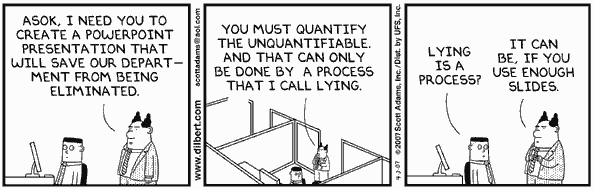
See complete interview
here2 years ago today: Merck - bad language and failure to release data
On
13 October 2005 Merck's former research chief testified that his insulting description of federal regulators in a 2001 e-mail was meant as a joke.
Edward Scolnick was asked by an attorney about his description of FDA regulators as "grade D high school students" after Merck faced officials at a government advisory committee meeting. "In another memo a few months later, Scolnick described regulators as "bastards" after they demanded Merck cite on its Vioxx label the fact that five times as many patients on Vioxx than on a placebo had suffered heart attacks during a clinical trial."
"My language was clearly, clearly inappropriate and was not respectful to the FDA," Scolnick said.
"Earlier yesterday, a current Merck executive, Alise Reicin (see her
other adventures in integrity), insisted repeatedly that she never thought Vioxx was dangerous and therefore did not initially release all the data on deaths of Vioxx users in another study"
"Asked whether Merck's revenue would have suffered if it had publicized the results of a study showing more deaths - from all causes - in patients using Vioxx than a placebo", Reicin responded: "Yes, you would expect sales would go down. But that would not influence the way I made decisions."
Approximately 100 000 people are thought to have died as a result of taking Vioxx. Today, two years later, it is reported that the FDA are very reluctant to hand over documents that show Merck’s relationships with the FDA (See
Pharmalot).
Source Philadelphia Inquirer|
Later|
Main Page