Showing posts with label Radiation experiments. Show all posts

Monday, October 22, 2007

Memory Hole (22 October): What happened this day?

Scientific Misconduct Blog Memory Hole: Events of October the 22nd

Gosh

97 years ago today: Dr Crippen found guilty - wrongly

On 22 October 1910 Dr. Crippen was convicted at the Old Bailey of poisoning his wife and was later hanged in London. In England, Crippen worked for a homeopathic pharmaceutical company. This month Science Magazine reported that based on mtDNA comparison with matrilineal relatives, the body found beneath Crippen's home was definitely not that of Cora Crippen.
Reference: Notorious Dr Crippen wrongly hanged, Science 16 Oct 2007
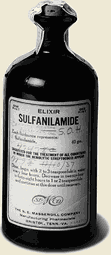
Sulfanilamine

70 years ago today: Dr A.S Calhoun on responsibility

On 22 October 1937 this letter was written by Dr. A.S. Calhoun. It was part of a key incident leading to a change in medicines regulation:

"But to realize that six human beings, all of them my patients, one of them my best friend, are dead because they took medicine that I prescribed for them innocently, and to realize that medicine which I had used for years in such cases suddenly had become a deadly poison in its newest and most modern form, as recommended by a great and reputable pharmaceutical firm in Tennessee: well, that realization has given me such days and nights of mental and spiritual agony as I did not believe a human being could undergo and survive. I have known hours when death for me would be a welcome relief from this agony."
(Letter from Dr. A.S. Calhoun, October 22, 1937)

The medicine that killed Dr. Calhoun's patients was Elixir Sulfanilamide (Read more here).

The question is whether our sense of personal responsibility for failing to examine science and integrity should be any different in 2007 given a semblance of "regulation". I like this quote from Dr. A. Dale Console, former medical director for drug giant ER Squibb:

"We could make no greater mistake than to be lulled into a sense of false security by believing that some disembodied force called the government will act like a beneficent big brother and make certain that the special interests will not predominate. If the general welfare is to be protected, it will be protected by the actions of people, not the government."

13 years ago today: More non-consensual radiation experiments disclosed

On 22 October 1994 it was reported that the US President's Advisory Committee on Human Radiation Experiments admitted that many more radiation had been conducted by the Government and the military from 1944 to 1974 than previously suggested. These included injection of plutonium and deliberate release of large amounts of radioactivity into the environment.

The number of human experiments were said to be in the thousands. Most were conducted without consent, and some on retarded and "incorrigible" children in institutions.

A decade ago I was involved in conducting a limited low-dose isotope experiment in osteoporosis (reference below). I had read many of the original studies of skeletal metabolism that were carried out in the 1950's. Some of these were interesting. I had thought little about their origins and will discuss one particularly problematical bone radiation study in a later posting. It's about trust.

References:
  • "Panel Says U.S. May Have Done Thousands of Human Radiation Experiments," New York Times, 22 October 1994
  • Blumsohn A, Morris B, Eastell R (1994). Stable strontium absorption as a measure of intestinal calcium absorption: comparison with the double-radiotracer calcium absorption test. Clin Sci. 1994 Sep;87(3):363-8. [Pubmed]
  • Panel Releases Report on Human Radiation (the US government view)
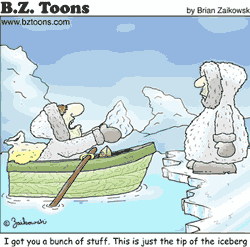
Tip of the iceberg

7 years ago today: Another easy case - Fujimura the archaeologist

On 22 October 2000 a renowned archaeologist Shinichi Fujimura dug some holes in Japan. He arranged some ancient stone tools in a symbolic pattern, and covered them with soil. He and his team then invited journalists to see this important discovery in progress.

Fujimura’s findings had led to the idea that the earliest human habitation of Japan was 600,000 years ago instead of a mere 30,000.

As it happens, reporters suspicious of his previous work had filmed the burial. Fujimura admitted to his fraud. Most of his earlier discoveries also proved to be forgeries.

Another nice cozy case of fraud for those want easy definitions of integrity.

Sources
BBC: Archaeologist exposed as fraud (with nice photographs)
Harvard Asia Quarterly Volume VI (3) 2002

Earlier|Later|Main Page

Sunday, October 14, 2007

Memory Hole (14 October): One funeral at a time

Scientific Misconduct Blog Memory Hole: Events of October the 14th

Quote of the day

Science progresses one funeral at a time.
Max Planck (paraphrase)

Radiation doctors abused trust

12 years ago today: Radiation Doctors abused trust: serious crimes but no blame

On 14 October 1995 the following commentary appeared in the New Scientist.

Radiation Doctors Abused Trust in the Name of Science"
Vincent Kiernan, New Scientist, 14 October 1995: 8


A common thread of deceit and serious ethical breaches ran through a series of secret radiation experiments carried out on Americans during the Cold War, a commission declared last week. It points the finger at medical researchers and government officials who authorised the tests. They failed to obtain consent form people who were exposed to radioactivity, neglected weigh the risks of the experiments against their benefits, and misused secrecy to cover their tracks. Despite these forthright conclusions, the commission has come under fire for being too timid.

The 14-strong panel focuses on an unspecified number of experiments in which people and their families were mistreated. "We learned things that we wish had not occurred," says Ruth Faden, an ethicist from Johns Hopkins University in Baltimore who chaired the commission.

In these experiments, scientists and bureaucrats did not always bother to check whether the risks were reasonable or could be minimised. In addition, they failed to gain consent either from health people who risked harm by participating in experiments, or sick patients who were unlikely to benefit from radiation. "Government officials and biomedical professionals should have recognised that when research offers no prospect of medical benefit, whether subjects are healthy or sick, research should not proceed without the person's consent," says the commission.

The panel also accuses researchers and officials of using secrecy not to protect national security, but simply to hide projects that would have been politically embarrassing of left the government open to legal challenge.

The commission recommends that the government should apologise to people who were experimented upon without their consent. In addition, compensation should be paid to people harmed in the tests such as children exposed to radioactive iodine... The families of people who could not sue the government because of secrecy also deserve financial damages. How many people might be eligible for payment is unknown, Faden says. Clinton says he will abide by the commission's recommendation and pay the compensation.

Reactions elsewhere to the commission's conclusions have not all been positive. Jack Geiger, professor of community medicine at the City University of New York, calls the report "timid" for taking too narrow a definition of the harm done by the experiments. The commission defines as harmful only those exposures to radiation that increased the risk of death from cancer by 10 per cent. "They're saying that the cancer risk is of no consequence if you don't die of it," Geiger says. Similarly, the report dismisses other damage such as psychological effects.

The commission steers clear of blaming individuals for ethical and moral violations. Neither does it recommend any sanctions against them or their institutions. "In many cases, the parties who were responsible are no longer living. In other cases, they're quite elderly" and hunting them down would be "inappropriate," says Faden. In many cases, it would be impossible to decide who was responsible, she says.

But in an effort to prevent any repetition, the commission recommends that the government establish "clear and severe penalties" for researchers who abuse their subjects. Scientists should also be certified in research ethics before being allowed to receive a government grant.

8 years ago today: Fraud concern in garlic research

On 14 October 1999 it was reported that Humboldt University in Berlin had begun a misconduct investigation involving a researcher (Holger Kiesewetter) accused of falsifying photographs in a paper (Atherosclerosis 144, 237 249; 1999) claiming an antisclerotic effect of a garlic. The study was funded by Lichtwer Pharma, the producers of the garlic medicine. Kiesewetter provided his data files and there appeared to be no evidence of fabrication.
Nature 401 (14 October 1999), p629; Nature. 2000 (6 April 2000), p404

2 years ago today: Pots and kettles - Johnson sues Amgen over Aranesp

On 14 October 2005 Johnson and Johnson Sues Amgen for Anti-Competitive Practices in Marketing Aranesp. Various news agencies reported that Johnson and Johnson is suing Amgen for anti-competitive practices used to market its drug darbepoitin (trade name: Aranesp), used to reduce anemia.

The full extent of the corporate corruption of clinical guidelines and real anti-competitive practices involving these drugs became apparent over the following years:

October 2005: Nature Reports on Conflicts of Interest Affecting Guideline Writers
October 2006: Guidelines in Whose Interest? - Amgen, Epoetin, and Chronic Kidney Disease
November 2006: Guidelines in Whose Interest? - Epoetin Revisited
January 2007: Reluctance of Medical Journals to Air Criticisms of Vested Interests
August 2007: How Aggressive Treatment of Anemia was "Earmarked"

1 year ago today: South Africa sidelines Health Minister

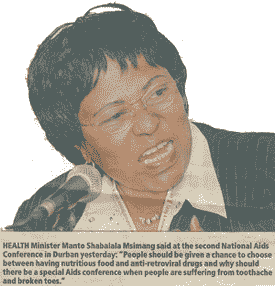
On 14 October 2006 the South African government attempted to sideline (temporarily) its health minister Dr Manto Tshabalala-Msimang in President Mbeki’s absence. This was part of an internal battle to get Tshabalala-Msimang dismissed over her role in the bungled approach of the South African Government to the AIDS crisis.

The battle against HIV was a crucial test of the post apartheid government. Many factors fuelled HIV denial in South Africa including unaffordability of treatment. Poverty and nutritional deficiencies have contributed to the epidemic. There is also little doubt that some of the science involving HIV drugs and infectious diseases is non-transparent gobbledegook. Some in comfortable Western armchairs have provided comfort to the perpetrators.

To quote Parks Mankahlana, Mbeki's main spokesperson:

"That mother is going to die and that HIV negative child will be an orphan. That child must be brought up. Who is going to bring the child up? It's the state, the state. That's resources, you see. (Quoted in Mail and Guardian, 21 July 2000)"

HIV accounts for at least 1700 deaths per day in South Africa. Mortality statistics (from all causes) in South African men and women aged 25-49 make sobering reading.
  • Year - Deaths
  • 1997 - 92,796
  • 1998 - 114,215
  • 1999 - 129,881
  • 2000 - 150,149
  • 2001 - 172,963
  • 2002 - 200,844
  • 2003 - 228,819
  • 2004 - 242,066
  • 2005 - 250,043
When reported as a rate, the death rate among men aged 30-39 more than doubled, while that among women aged 25-34 more than quadrupled over this period of time. By 2007 there were around a million excess deaths.

Reading: Smith TC, Novella SP (2007) HIV Denial in the Internet Era. PLoS Med 4(8): e256
Source for date: South Africa sidelines its health minister on AIDS issues BMJ 333:774
Earlier|Later|Main Page

Monday, October 08, 2007

Memory Hole (8 October): Illusions of due diligence

The Scientific Misconduct Blog Memory Hole: Events of October the 8th

This quotation from the movie Syriana is appropriate to many of these events:
"We're looking for the illusion of due diligence, Mr. Pope. Two criminal acts successfully prosecuted -- it gives us that illusion."

60 years ago today: Attempt to hide secret human radiation experiments

On 8 October 1947, J.C.Franklin, operations manager of Oak Ridge, wrote to the general manager of the US Atomic Energy Commission: "There are a large number of papers which do not violate security but do cause considerable concern to the Atomic Energy Commission insurance branch, and may well compromise the public prestige and best interests of the commission". He added that such documents "are definitely prejudicial to the best interests of the Government" and ordered that "any such documents be edited or kept secret".

He was writing about the need to keep secret many research experiments involving radiation in humans. These had been carried out without consent or public knowledge.

Source: "Inquiry Links Test Secrecy To A Cover-up," New York Times, 15 December 1994

8 years ago today: Further adventures of Professor Martin Keller

On 8 October 1999 it was reported that Professor Martin Keller of Brown University had received "hundreds of thousands of dollars from drug companies" while he was receiving federal funds to test new drugs, and then provided favorable reports on those drugs without notifying the payments. Keller was paid more than half a million dollars in consulting fees in 1998, most of it from pharmaceutical companies whose drugs he touted.

Scientists seeking US funds are required to disclose to their research institutions any "significant financial interests" that could be affected by the proposed study. Then it's up to the institutions to assess the financial interests. If the institutions find a conflict, they must report it to the US funding agency and protect the research from bias. According to the newspaper report, Brown University appeared unconcerned about the regulations or the conflict of interest. The American Psychiatric Association announced that they were "investigating". For Keller's later involvement in shonky research see here or here or read about his depressing involvement in GSK's study 329 here.
Source: Boston Globe 8 October 1999, page B01

8 years ago today: London professor struck off for bullying and dishonesty

On 8 October 1999 A British professor of respiratory medicine with an international reputation in asthma research was struck off the medical register for bullying and threatening a junior colleague to cheat in a drug trial. See report of the case in the BMJ here and here.

Former Professor Robert Davies had threatened and abused a young doctor and tried to persuade him to break the trial code in order to fiddle the results. Davies threatened that Ramsay's career would be "finished" if he told anyone about the request to break the code blinding the study of the SmithKline Beecham drug Prankulast.
  • The case involved tape recording of Professor Davies by Dr Ramsay. It is likely that without that recording the incident would have ended the career of Dr Ramsay instead of his senior "old-tie" boss. Davies told another colleague that he did not "know a microscope from a fucking hole in the ground". On the tape, Professor Davies is heard saying: "If I hear you speak to anybody you’re finished, OK." Davies said he had been "flabbergasted" to learn Ramsay had taped their conversations. He said when he had told Ramsay he would be finished if he spoke out, it was "in no way a threat to his career".
  • The case included a strange comment from Joanna Glynn, counsel for the GMC. She said that "there was no body, other than the General Medical Council on which the pharmaceutical industry could rely to regulate doctors' activities in clinical trials". Kindly contact me for some education Ms Glynn or read this or this about the corruption of the GMC.
  • The case is important in terms of definition of research misconduct. According to the current tortuous definition promulgated by the ORI and others, the actions of Professor Davies would not constitute research misconduct. Bullying with intent to disrupt the scientific record is not so defined.
Reference: BMJ 1999;319:938 London Professor struck off for bullying and dishonesty

5 years ago today: Pioglitazone data - when all 30 authors are wrong

On 8 October 2002 Nick Freemantle (University of Birmingham) reported in the BMJ (BMJ 2005;331:836-838) that clinical trial findings involving the drug Pioglitazone (the PROactive trial) had been misrepresented and that the conclusions were unsafe.

A response by a reader (Dr James Penston) was pertinent and bears on the responsibilities of authorship. His letter was entitled "When all thirty authors are wrong".

Penston writes: "Perhaps this was simply an innocent error. But it is hard to believe that none of the thirty authors – including 27 professors – were aware that it would be misleading to interpret the data as showing that pioglitazone reduced macrovascular events. Given that 28 of the 30 authors had financial links with the pharmaceutical industry and that the study was funded by Takeda and Eli Lilly, it would have been prudent to avoid at all cost the charge that this manipulation of data stemmed from a conflict of interest."

4 years ago today: Nigeria versus Pfizer

On 8 October 2003 the US Court of Appeals reinstates a Nigerian research case against Pfizer.

"The central events at issue in this lawsuit occurred in 1996, not long after epidemics of bacterial meningitis, measles and cholera broke out in Kano, Nigeria. Pfizer established a treatment center at the Infectious Disease Hospital in Kano to treat victims of the meningitis epidemic.

Plaintiffs allege that Pfizer, instead of using safe and effective bacterial meningitis treatments, used the epidemic as an opportunity to conduct biomedical research experiments on Nigerian children involving Pfizer's "new, untested and unproven" antibiotic, trovaflozacin mesylate, better known by its brand name, Trovan."

Plaintiffs claim that Pfizer failed to obtain informed consent, and that some children were deliberately given inadequate doses of ceftriaxone so that Trovan would look more effective by comparison. Several children died. The case is ongoing (see AHRP or here).

What is the chance that justice will be served under the circumstances?

Four years later it seems that Pfizer is going to try to keep the whole thing quiet through some form of payment of money or perhaps a large bribe.
Source: AHRP http://www.ahrp.org/infomail/03/10/14.php

3 years ago today: FDA officials attempt to soften a report by Dr David Graham about Vioxx

On 8 October 2004 it was revealed that FDA officials had attempted to soften the conclusions of a scientific report about the drug Vioxx produced by Dr David Graham. Senator Grassley was reported as saying "Instead of acting as a public watchdog, the Food and Drug Administration was busy challenging its own expert" “Dr. Graham described an environment where he was ostracized, subjected to veiled threats and intimidation".

Vioxx was later withdrawn. It is estimated that the use of this drug has resulted in at least 100,000 deaths worldwide.
Source: "FDA Officials Tried To Tone Down Report on Vioxx" Wall Street Journal, 8 October 2004

2 years ago today: MHRA leadership asserts its integrity, but with what evidence

On 8 October 2005 Professor Alasdair Breckenridge and Professor Kent Woods coauthored a strange paper in the BMJ (BMJ 2005;331:834-836) subtitled "How does an agency funded by user fees make impartial decisions about the safety of new and licensed drugs?". Breckenridge and Woods are important people. Breckenridge is the chairman of the UK drug regulator (the Medicines and Healthcare Products Regulatory Agency, MHRA) and Woods is the chief executive of the agency.

And the answer to the question is?

Some have asked these gentlemen about the ongoing "independent criminal investigation" of GlaxoSmithKline (see see 1463 days to nothing).

Breckenridge sat on GSK's scientific advisory committee for years before taking up his post at the MHRA (reference). Ian Hudson, who was the worldwide safety director of GlaxoSmithKline (GSK) until 2001, is now director of licensing at the MHRA (reference). As Charles Medawar has pointed out here or here there is a lot of explaining to do.

Earlier|Later|Main Page