Showing posts with label Procter and Gamble. Show all posts

Monday, September 08, 2008

Placebo Journal and AccuPringles

The Placebo Journal continues to produce great material. Watch the latest Placebo TV broadcast on product-free pharmaceutical advertising.

I was particularly struck by their promotion of Accupringles from our friends at P&J Pharmaceuticals

Host unlimited photos at slide.com for FREE!

Available in
  • Original
  • Sour Cream and Hydrochlorthiazide
  • Ranch and a Channel Blocker
  • Jalapeno and an ARB
Earlier|Later|Main Page

Sunday, August 24, 2008

Conflicts of Interest - and silence

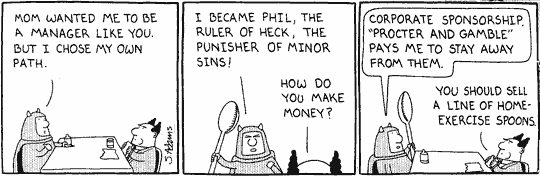
I'm a fan of Scott Adams and Dilbert. I like this 1996 strip. First, it features Procter and Gamble. Second it has something to say about conflicts of interest.

Phil the Prince of Insufficient Light is the ruler of Lower Heck (and the brother of the pointy-haired boss). It pokes fun at P&G's logo controversy. In brief, P&G received undesired media publicity in the 1980s when an urban legend declared that their corporate logo was a Satanic symbol. This forced P&G to adopt a new logo. In 2007 a court ruled that P&G is not in league with his Satanic Majesty. P&G won a $19m lawsuit against rival Amway over the rumours. I'll have more to say of this controversy later.


"This is about protecting our reputation," said Jim Johnson, P&G's chief legal officer.

The strip also has something interesting to say about conflicts of interest (and declaring of such conflicts). Some imagine that declaring conflicts is the be-all-and-end-all solution to the problems of pharmaceutical science. One counter-argument is that conflicts influence not only that which is done, but also that which is not done. Sitting in silence while a colleague is bullied for example.

I propose that more consideration should be given to the concept of corporate sponsorship "to stay away". Click Here to fund the Scientific Misconduct Blog.

Earlier|Later|Main Page

Tuesday, May 13, 2008

Science, Morality, Abu Ghraib and Game theory - an interview

Seed magazine has just posted the text of a conversation between filmmaker Errol Morris and evolutionary psychologist Marc Hauser about game theory, Stanley Milgram, Abu Ghraib, A Clockwork Orange, communication with dogs, and whether science can make us better people.

It is quite relevant to general topic of this blog. I have always been intrigued by the odd combination of claimed due diligence and integrity with complete non transparency. For example, if Procter and Gamble have any residual faith in their "analysis" of Actonel data (welcome admissions of guilt apart) then why refuse to let everyone see it. They should be proud of their ultimate show of integrity. Likewise, if GlaxoSmithKline are proud of "science" on Seroxat/Paxil, and if the UK regulator the MHRA think that they conducted a plausible investigation of scientific fraud involving this drug, then why cover it up? Why not let everyone know what your definition of fraud is, and let everyone see the process and who made the decisions. What's there to hide?

A snippet:

EM: This is a question that I still wonder about. They said it's okay to kill Jews: Jews represent a threat to our way of life, to our gene pool, to our values, and so on. They've justified their behavior completely. But, if you think it's okay, then why try to cover it up? Why try to conceal the fact that you're doing it? That becomes the really complex question. You quickly enter this hall of mirrors. You can say, well, they thought it was the right thing to do, but they knew others might not view their behavior that way and that they should therefore cover their tracks. But isn't that tantamount to saying that they knew it was wrong? It's a real question.

MH: It is a real question. But ultimately, I think it comes back to having a sense of your place in the world. You have a sense of what others will respond to in terms of your actions and, ultimately, that feeds back into your behavior. So I think you're right, both the covering up and the ability to go forward are two parts of the story.

....

EM: I wouldn't say that I'm exactly surprised by it but it made me think that morality is the combination of two things: "I'm sorry," and "I'm sorry I got caught." There are two things always operating. There's you, and then there's what the world thinks of you.

MH: Yeah.

EM: If I do X, do I feel comfortable doing it? Do I feel comfortable doing X even though I know people will look at me with extreme disapproval?

MH: I mean that's the categorical imperative, right? If you want to work through the world of rights and wrongs, imagine would you feel comfortable doing it yourself. And now imagine a world in which everybody would do what you just did and would you feel comfortable there? You universalize it.

Worth reading here

Earlier|Later|Main Page

Monday, April 21, 2008

The Contract (Procter and Gamble)


In 2002 I signed a research agreement with Procter and Gamble Pharmaceuticals [1]. Research was to be carried out at the University of Sheffield by two named investigators (Dr Aubrey Blumsohn, Professor Richard Eastell).

It is accepted that a University would be guilty of negligence in permitting investigators to sign a contract prohibiting or hindering release of information involving a drug [2,3]. Industry cannot buy the right to desired findings or the right to suppress undesired findings. The agreement signed[1] was however in accordance with good practice, and should have protected integrity:
  • The agreement did not seek to impose restrictive limitations on the rights and obligation of investigators with regard to data [1 section 4.3]. It specified that the university clinical investigators would interpret and report upon the data.
  • The agreement did not seek to impose restrictive conditions on honest unfettered publication [1 section 4.3]. The contract stated that sponsor should be given courtesy of sight of any proposed publication, but specified that investigators were under no obligation to incorporate any comment from the sponsor.
  • The agreement imported the obligations placed on academics by the University itself, the policies of the University, and obligations imposed by professional rules of conduct [1 section 1.2]. It stated - "The institution through its policies and practices" should cause the investigators to observe "all responsibilities" as "employees of the University of Sheffield". The University of Sheffield in turn has clear guidance pertaining to research integrity and professional obligations (See Sheffield University Research Integrity Guidelines).
References
  1. Research Agreement between P&G Pharmaceuticals, Dr A Blumsohn and Professor R Eastell. The University of Sheffield (2002-06-02).
  2. Steinbrook, Robert (2005-05-26). "Gag clauses in clinical-trial agreements". The New England journal of medicine 352 (21): 2160-2. PMID 15917381.
  3. Mello, Michelle M; Brian R Clarridge, David M Studdert (2005-05-26). "Academic medical centers' standards for clinical-trial agreements with industry". The New England journal of medicine 352 (21): 2202-10. PMID 15917385.

Earlier|Later|Main Page

Saturday, April 19, 2008

Telling it like it is (Procter and Gamble)

Not sure how I missed this one. From the Center for Media and Democracy (prwatch.org) 25 March 2008.
The director of external relations for Procter & Gamble, Mark Chakravarty, recently told a UK healthcare PR conference that the drug industry is less than popular with the public. "There is a high suspicion of the pharma industry. Greed, dishonesty and fraud are some of its associations. The clinical trial press this week and an increased number of drug scandals add to this image," he said.
Quite, Procter and Gamble.

I'm less worried about the "greed". Commercial companies don't need to apologise for generating money from honest science and real innovation. Let's concentrate on the lies and the fraud, and more importantly on the collusion with government and "regulators" to hide evidence, to excuse bad science and to escape responsibility. Why not give me a call Mr Chakravarty? Effective public relations requires working with critics, admitting faults and correcting them.


Earlier|Later|Main Page

Tuesday, April 15, 2008

Those with unbitten hands

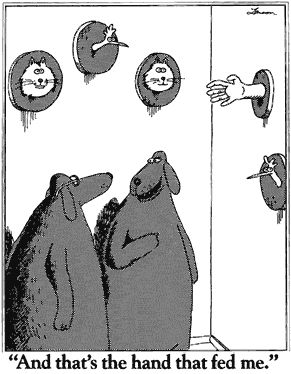
Dont bite ..... the hand that feeds you


And the corollary is .... if the hand is unbitten, look at who it feeds.

Lick the hand.

Earlier|Later|Main Page

Monday, April 14, 2008

Money and accountability (Procter and Gamble)

My ex colleagues at Sheffield University are in receipt of a great deal of new grant money. That is good. I am pleased. However, with greatness comes the need for accountability and answering. One of those colleagues has a great number of questions to answer about research involving Procter and Gamble. Honest answering is particularly important for a scientist, a very senior doctor and a previous Research Dean of a Medical School. Such individuals are held to a higher standard.

I am glad that Professor Eastell has had the good grace to admit to the false "findings" previously reported, the lie told to the Journal, and a little of the hidden data. The answering could however have been a little more straightforward, with less in the way of linguistic acrobatics. The scientific community has already demonstrated that it is not quite so easily diverted. The false publication should simply have been retracted (statistics and further publication to follow). And that was just the first of the three intended false publications.

With time I have become a dispassionate but interested observer of these events. There is a great deal to learn from them. The sad, almost desperate, attempts at obfuscation by others should be examined. Those attempts convey a great deal about the integrity and motives of regulators and leadership in medicine. It conveys how little respect we have for our patients who place themselves at risk to contribute to our "science". The events also convey a lot about way in which we deal with scientific misconduct when it involves considerable power. The system is kaput, bankrupt.

Character, they say, is like a fence. It can never be strengthened by whitewash, and it is a mistake to try. An apology might have been appropriate, and would certainly have helped a little.

"And sorry seems to be the hardest word
It's sad, so sad,
It's a sad, sad situation
And it's getting more and more absurd"
(Elton John)

09 April 2008
New Biomedical Units to put Sheffield at forefront of clinical research


The University of Sheffield, in partnership with Sheffield Teaching Hospital´s NHS Foundation Trust Sheffield, has been successful in its bid to develop two National Institute for Health Research (NIHR) Biomedical Research Units in musculoskeletal and cardiovascular disease.

The Biomedical Research Units will drive innovation in the prevention, diagnosis and treatment of ill-health and translate advances in medical research into benefits for patients.

They will be established in priority areas of disease, ill health and clinical need. Each unit will receive funding for four years with the first year drawing in £750k and £1m per year for the remaining three years (around $7.5 million)

The awards were made following bids by Professor Richard Eastell and Professor David Crossman from the University´s School of Medicine and Biomedical Sciences.

Professor Richard Eastell, Head of the Academic Unit of Bone Metabolism at the University of Sheffield and Honorary Consultant in the Metabolic Bone Centre at Sheffield Teaching Hospital´s NHS Trust, said: "We are delighted to have been successful in our application for this funding. This is a great boost to the Trust and the University.

"Having these two biomedical research units based in Sheffield is a major coup for the city and will firmly place us at the forefront of research.

"So many people will benefit from these units as they will enable us to be even stronger in these areas. This announcement is just the beginning, this is a wonderful opportunity for the city to shine.

Professor David Crossman, Head of Cardiovascular Science at the University and Honorary Consultant Cardiologist at Sheffield Teaching Hospital´s NHS Foundation Trust, said: "I am delighted with the investment in cardiovascular research in Sheffield. This will allow us the opportunity to launch new programmes of work designed at bringing our basic research to our patients with coronary artery disease."

Professor Tony Weetman, Dean of the School of Medicine and Biomedical Sciences at the University of Sheffield, said: "This is welcome news, which allows the University´s School of Medicine and Biomedical Sciences and the Trust to build on our successful partnership in translating research into medical practice for the benefit of patients.

"Our success in bidding for these prestigious NIHR Biomedical Research Units has been underpinned by our joint clinical research facilities, and I look forward to even closer working with the Trust as we develop the profile of academic medicine in Sheffield."

Andrew Cash, Chief Executive of Sheffield Teaching Hospitals NHS Foundation Trust, said: "This is a fantastic coup for Sheffield Teaching Hospitals and the University of Sheffield which will put the city firmly on the research map. We have an excellent ongoing relationship with the University and this is a further opportunity to extend that work for the benefit of patients in Sheffield and beyond."

For further information please contact: Jenny Wilson, Media Relations Officer on 0114 2225339 or email j.c.wilson@sheffield.ac.uk
Earlier|Later|Main Page

Sunday, April 13, 2008

More great statistics from Procter and Gamble (Micro Statistics Tutorial 08)

Advertising Standards Authority (UK): 26 March 2008, Adjudication over Cat Food Advertisement (Iams Cat Food). More worthwhile statistics from Procter and Gamble:

The advertisements stated:
  1. "Vets know catering to all your cats' different needs isn't easy ... 8 out of 10 vets recommend Iams
  2. Voted No.1 recommended dry cat food brand available in supermarkets
  3. Small print at the bottom of the ad stated "*Based on an independent survey of vets at the Congress of the British Small Animal Veterinary Association on complete dry cat foods available in supermarkets (April 2007)".
The Advertising Standards Authority noted that:
  1. The survey asked vets if they would recommend any dry dog food, dry cat food or wet cat food brands. Only 31% of the participating vets (31% of 334) in fact recommended Iams.
  2. Furthermore, the survey questions allowed participants to select a number of brands; they did not select only one brand.
  3. Two other brands had more recommendations but these brands were available in pet food shops.
  4. 80% of vets who recommended a brand of dry cat food available in supermarkets included Iams amongst the selection of products recommended, but not necessarily over those other products
Action: ASA told P&G to remove the claims "8 out of 10 vets" and "Voted No. 1 by vets" from future advertisements. The ASA did not comment on the irrelevancy of the survey (it should have surveyed cats), the nature of the sample, the post-hoc hypothesis, lack of any P value or who commissioned the "survey". For contaminated P&G catfood, see here.

Tutorial: Try to reconstruct the statistics from the ASA report.

See here for Collated Micro-Statistics Tutorials

Earlier|Later|Main Page

Tuesday, April 08, 2008

The Scientific Misconduct Wiki (Procter and Gamble)

Unlike static websites, the blogging paradigm allows a great deal of collaboration and interchange between people (witness the rallying of support for Bob Fiddaman over the legal threats he received from GSK). Investigative journalism through Blogs has becoming increasingly important. It is fair to say that the majority of concerns raised about the ENHANCE trial of Vytorin have been brought to light by investigative bloggers, Forbes magazine and the Wall Street Journal. The immediacy of blogs (and news reports) makes it hard to develop a body of systematic evidence, or to get keep historical perspecive. A Wiki provides a different model which allows both collaboration and systematic collection of information.

I have therefore started the Scientific Misconduct Wiki to run in parallel with this blog. Hopefully this will form the seed of a peer reviewed online journal devoted to Scientific Integrity. For the moment, it will serve as a non-collaborative repository for reports and academic analysis of the integrity scandal involving Procter and Gamble and the drug Actonel (including the serious implications of the failed but rather sad attempts at coverup and delay by "regulators"). I will add to the collection in parallel with the blog postings. Currently, the Wiki contains all of the Collated News Reports about the Actonel story to set a framework and timescale for discussion of the science and principles.

Most recent in the news listings is this paper by Professor Martin Bland on the statistical re-analysis and attempted reconstruction of the first of the three implicated P&G publications. (Bland, M. 2007. "Risedronate, the BBC and me". Significance - Royal Statistical Society:@ 4:4:175-178). The reanalysis of the second of the three publications is here.

Here is the raw data eventually provided by Procter and Gamble in April 2006 [Link] that formed the supposed basis of three P&G publications (two only in draft) as well as many scientific meeting abstracts. Under the circumstances, P&G should have allowed an open statistical analysis, but they have refused to allow such open scrutiny. The data is therefore encrypted (see "Procter & Gamble - Let's take the high road"). Nevertheless, please join the people who downloaded it previously.

This refusal of openness is unexpected, because P&G no longer have much to hide. P&G and "authors" (of publication 1) have of course admitted to all of the key "errors" in the first publication. The problems in the second and third publications were similar, but even more overt. Authors have also admitted to having been less than truthful over access to data - the central problem. Of ongoing concern is the refusal by P&G to provide confounding variables to authors, and more perversely the refusal to provide the wording of consent forms that patients would have signed.

If anyone would like to assist as editor of a peer-reviewed Wiki-based Scientific Integrity Journal, please let me know.

Earlier|Later|Main Page

Saturday, April 05, 2008

Gardasil scandal: University of Queensland exits the civilized scientific community

Just after my last post on the role of a University I read this piece in today's British Medical Journal about an appalling episode at the University of Queensland that goes right to the heart of what a University is. The University of Queensland has broken its contract with the scientific community. This is an absolute disgrace.

I am reminded of the letters to me stating that I needed University "authorisation" to discuss issues of scientific procedure. I recall the warning of "public dissociation" and that "public interest disclosure legislation" somehow applied to discussion of scientific methodology involving Procter and Gamble.

From the University secretary and registrar at Queensland (Douglas Porter) this most absurd of comments:

Douglas Porter, wrote to Dr Gunn, asking him to provide a written apology to CSL stating that the "comments were made by you in your personal capacity and were not endorsed or authorised by the university." - "The University of Queensland’s vice chancellor declined to comment and referred the BMJ to Mr Porter, who said that Dr Gunn "had no authority to speak on behalf of the university" and should not have mentioned his university position. "It’s an absolute storm in a teacup."

What are you Mr Porter - The University of Kentucky Fried Chicken, or a real University? Shame, shame and more shame.

BMJ 2008;336:741 (5 April) [Link]
Academic freedom is at risk in dispute over Gardasil, lecturers say
Melissa Sweet, Sydney


Senior academics are outraged that the University of Queensland has asked an academic to apologise to a drug company for his public comments on a vaccine against human papillomavirus that was developed jointly by the university and the company.

Academics at the university and elsewhere say that the request is a threat to academic freedom and warn that it raises worrying concerns about universities’ independence and ability to negotiate conflicts of interest.

The request came after the company, CSL, wrote to the university’s vice chancellor complaining about comments on the radio made by Andrew Gunn, a senior lecturer in general practice.

The programme dealt with the general issue of pharmaceutical marketing and briefly mentioned Gardasil, whose development has reaped millions of dollars for the university as well as public and political kudos.

CSL’s director of public affairs, Rachel David, wrote: "I feel Dr Gunn’s comments are inappropriate and inconsistent with the long-standing relationship CSL has with the University of Queensland and given the involvement of the university in the development of Gardasil."

On 14 March the university’s secretary and registrar, Douglas Porter, wrote to Dr Gunn, asking him to provide a written apology to CSL stating that the "comments were made by you in your personal capacity and were not endorsed or authorised by the university." Mr Porter also asked to be sent a copy of Dr Gunn’s letter to CSL.

Dr Gunn said he was disappointed by the university’s response and that the company’s complaint seemed to be aimed at stopping him from speaking out again. "Even if you’re fairly resistant to pressure, it’s got to make you think twice about saying potentially critical things about their products," he said.

Wayne Hall, of the university’s School of Population Health, described CSL’s response as "heavy handed" and said that the university’s response was "disrespectful of the rights of academics to speak out on matters of public interest."

The university’s executive dean of health sciences, Peter Brooks, also expressed concerns about the handling of the complaint and said that universities generally needed to do a better job of resolving conflicts of interest.

"If you’ve got very large amounts of money changing hands, then it’s very difficult, I think, not to let that influence you to some extent," he said. "It’s a dilemma that universities have.

"Quite frankly, I have said that I think that if anybody at UQ [University of Queensland] makes a statement about Gardasil, including the inventors, if it’s going to be a public statement then probably under conflict of interest [guidelines] they should acknowledge that the university receives significant funding from CSL each year."

Paul Glasziou, director of the Centre for Evidence-Based Medicine at the University of Oxford and a former University of Queensland academic, said that the freedom of academics to speak without interference from their employers or government was crucial in an open society and that it was reasonable for Dr Gunn to have used his academic title.

Chris Del Mar, dean of health sciences and medicine at Bond University, Robina, Queensland, and an honorary professor at the University of Queensland, said that universities should support academics in saying what they think. "Discourse and argument are the stock in trade of academics," he said. "To gag [argument] is anti-academic."

Simon Chapman, of the University of Sydney’s School of Public Health, said that the registrar’s letter should appal all researchers and academics.

"The registrar and vice chancellor would do well to read their own website on how academics should present themselves in public. The University of Queensland’s policy states: ‘It is accepted practice that where a member of staff is writing on something which is clearly within the range of professional expertise, it is appropriate for the member of staff’s university position to be given.’"

Professor Chapman said that the registrar’s suggestion that a university would have official views on drug company promotions or a specific vaccine is "both preposterous and inimical to academic freedom."

David Henry, adjunct professor at the School of Medicine and Public Health at the University of Newcastle, New South Wales, said that the university’s response was even more inappropriate than CSL’s.

He said, "It is fairly predictable that a company will react to what they see as a commercial threat, but it is very worrying that a university would require an academic to get clearance before giving an interview."

"It shows that poor funding of Australian universities has led to desperation in their attempts to raise funds from other sources, including commercial companies. In doing this they are abandoning part of their mission, which is to generate and communicate new knowledge in a fearless and impartial way."

Carolyn Allport, president of the National Tertiary Education Union, added: "If freedom of inquiry is to be respected as a core responsibility of universities, then it is important that both universities and academics and researchers retain their rights to engage in critical commentary, in the public interest."

The University of Queensland’s vice chancellor declined to comment and referred the BMJ to Mr Porter, who said that Dr Gunn "had no authority to speak on behalf of the university" and should not have mentioned his university position.

"You’re just beating this up," he told the BMJ. "It’s an absolute storm in a teacup."

Dr David of CSL said that she had asked the university to clarify whether Dr Gunn was speaking on behalf of the university, because "if the university does not have access to correct information about our products, it is clearly a more important issue than if the interview simply reflected the opinions of an individual."

She said, "Neither I nor anyone else at CSL has the power or the inclination to ‘gag academic freedom’ or any form of freedom of speech, and I am not aware of any arrangement with the university or any other academic institution in Australia that would even allow for this possibility."

A spokesman for UniQuest, the university’s commercial arm, said that the exact value of Gardasil’s returns to the university was confidential but that it amounted to some millions of dollars annually.

A transcript of Dr Gunn’s comments is available at www.abc.net.au/rn/perspective/stories/2007/2108059.htm


Although not relevant here - remind me - what is the evidence that Gardasil actually works?

Earlier|Later|Main Page

What is a scientist?

Any discussion of academic or university malfunction has to begin with at least some mention of the nature of being an academic, and the raison d'être of a University. Universities exist for only one reason: to add to human knowledge and to disseminate that knowledge through publication and teaching. A scientist is an academic who uses the scientific method.

Extreme cases are always useful. Assume we have a university employee who accepts money, in exchange for fronting scientific findings "produced" by others. Assume further that the employee is disabled from verifying those findings (which might have been falsified). Assume too that this person attempts to persuade others to do the same. Most sensible individuals would agree that such a person would not fulfil the minimal trade description standards for being an academic or a scientist. At what point does an scientist cease to be a scientist? At what point does a University cease to be a University?

To quote Carlo Suarès (French writer, painter and Kabbalah author):
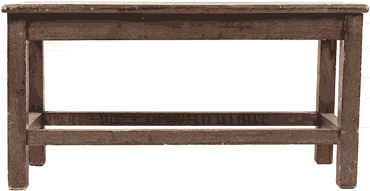
This table has four legs.
A table with a broken leg remains a table.
But a table from which the four legs have been removed becomes only a flat piece of wood.
At what moment did it cease to be a table?
Is Professor Martin Keller of Brown University a scientist? At what moment did he cease to be one?

And are some fields more "scientific" than others? This might depend to some extent on the nature of the field itself. It is very difficult to be a successful unscientific physicist. By contrast, branches of "alternative" medicine may reject the need to evaluate hypotheses, and are unscientific by definition. However, in most fields, integrity is determined by the leadership of the field, and the extent to which those leaders care about honest science. The health of a discipline or an institution is most clearly revealed when things go badly wrong. The leadership of the field I know best (osteoporosis) consists of a mixture of excellent scientists and some scientifically discreditable individuals. To paraphrase Dr. Stephen Leader it is at least in part a field
"whose goal it is to turn bullshit into airline tickets".

Earlier|Later|Main Page

It's Time

I haven't devoted much public effort over the past few months to Procter and Gamble, Actonel, the hidden data, and the three misleading publications. I felt it best to allow time for the excuses and regulatory hand-sitting to be finalized.

To collude with dishonest science, and to protect powerful colleagues, all the regulators had to do was to do nothing of any relevance. There has been ample opportunity to do nothing very well. This is despite partial admissions that scientific conclusions were false, that statistical analyses were false, that lies had been told to a medical journal, and that every code of good scientific and medical conduct had been breached.

There is nothing unusual about inaction or the protection of vested interests and friends. There is nothing unusual about the observation that honest science seems not to matter to medical leadership, even when there is demonstrable harm to patients. There is nothing unusual about the observation that regulators fail to uphold their own codes of conduct when it suits them, but use those same codes to bully individuals asking difficult questions. There are almost no instances where medical "regulators" have acted to uphold scientific integrity in the UK. There is also nothing unusual about the silent complicity of colleagues. What happened to me happens to many others. I want to ask some fairly simple questions.

Over the next weeks I will devote considerable effort to the facts, regulatory failures, and the principles of good conduct in academic medicine. I will discuss the types of behaviours regulators regard as acceptable. I will try to relate these failings to their stated codes of conduct, and ask what purpose these organizations serve. I will discuss the nonsensical concept of "whistleblowing" in research, and the shameful way in which research misconduct is dealt with in the UK. Hopefully the discussion will be of wider interest. Let the science begin.

Earlier|Later|Main Page

Thursday, November 22, 2007

Procter and Gamble and the rigmarole of integrity

Sisyphus sleepingIt is obvious to several people that I have been extremely lazy the past week. I have been struggling to catch up with the memory hole feature after attending (and presenting at) a few great meetings.
The excellent picture of Sisyphus sleeping is with kind permission of artist Michael Bergt. Sisyphus is condemned to roll a large rock up a hill. Upon reaching the top the rock rolls back, and the task has to be repeated - endlessly. The story appears to be one of eternal and pointless labor.

I haven't said much about recent progress with the first of the three shonky Procter and Gamble publications. I felt it best to allow time for the excuses to be finalized, and to allow others to comment first. A few examples of those comments are referenced.[1][2][3][4][5][6] I don't necessarily agree with all commentary, but generally people are not morons.[7]

I am finding the "Memory Hole feature" quite useful myself as a way of understanding how we got where we are. To catch up I am going to skip the dates 13-20 November. I'll get back to filling in the blanks over the next few weeks.

References:
  1. Colquhoun, Professor David (2007-11-06). Universities Inc. in the UK, Corporate Corruption of Higher Education: part 2.
  2. Baty, Phil. "Expert admits he did not have full access to data", Times Higher Education Supplement, 2007-10-12.
  3. Silverman, Ed. Boning Up: Journal Tightens Disclosure Policy. Pharmalot.
  4. Woodhead, Michael (2007-10-28). A double dose of dodgy data.
  5. Saunders, Professor Peter (2007-11-01). Actonel, Dog that Did Not Bark in the Night. Institute of Science in Society.
  6. Poses, Roy (2007-10-12). Journal Changes Policy After Blumsohn Case.
  7. Moron - n. a person whose actions are explained by motives one is not smart enough to understand. See also * Dullard, Idiot, Ignoramus (Author: S.R. Brubaker, Devil's Dictionary Defiled)
Earlier|Later|Main Page

Sunday, July 29, 2007

Procter and Gamble goes dumpster diving

procter and gamble goes dumpster divingI tape recorded Procter and Gamble and other "researchers" involved in some problematical sponsored clinical research. That was an important thing to do. I have been waiting a while for an honest response. I have been waiting for permission to make available the hidden (and now revealed) raw data upon which P&G relied in their three scheduled Actonel ghostwritten publications. I have been waiting for a few other refused things (like the text of consent forms from patients upon whom I performed measurements).

Here is the correct analysis for one of the publications. Here is the correct analysis for another of the publications (Eastell et al., 2003). Here are the Data underlying all three publications (encrypted).

So far all involved have been a little evasive, giving artful answers to "questions" that had not in fact been asked. That seems to be to be a bad idea John Eisman.

While being politely patient, I found some most interesting old news reports about P&G's own spying tactics.
New York Times Page C7, September 7, 2001
P.& G. Said to Agree to Pay Unilever $10 Million in Spying Case
By JULIAN E. BARNES (NYT); Business/Financial Desk
DISPLAYING ABSTRACT - Procter & Gamble will pay Unilever about $10 million and agree to unusual third-party audit to settle dispute that arose after P&G acknowledged that it had taken documents from trash cans outside Chicago office of Unilever; Unilever had made demand to ensure that Procter & Gamble did not change its marketing or product development plans for its hair care business after reviewing about 80 pages of confidential Unilever plans
Procter & Gamble Admits to Spying on Unilever

In a disclosure that shines a light on the shady world of corporate espionage, FORTUNE magazine recently reported that Procter & Gamble, one of the nation's largest and most admired corporations, has "recently engaged in a corporate espionage program against competitors in its hair care business that even the company itself admits spun out of control."

P&G claims it did not break any laws, but a spokeswoman conceded that spying activities undertaken by a "corporate intelligence" company that was hired by P&G "violated our strict guidelines regarding our business policies."

DEFINITION: Corporate or industrial espionage is the practice of spying on business competitors to steal proprietary information, including product designs and marketing plans. While corporate espionage sometimes includes computer hacking, it is just as likely to involve non-technology-related practices, such as rummaging through a competitor's trash ("dumpster diving") or simply interviewing disgruntled employees.

P&G has confirmed that at least one competitive intelligence company it hired engaged in dumpster diving to find information on rival Unilever's hair-care business. The competitive intelligence operatives are also said to have lied to Unilever employees - claiming they were market analysts in a further effort to gather information.
Procter & Gamble vs. Unilever
In 2001, P&G undertook a corporate-espionage program by hiring a "consulting firm" to rummage through Unilever's trash and steal the secret formula for a new hair-care product. The two companies eventually reached a settlement; P&G agreed to pay Unilever $10 million. The firm hired to do the dirty work is headed by a former Green Beret and U.S. government intelligence operative who served in the Phoenix Program, a covert operation during the Vietnam War.

Remarkably this isn't the first time P&G has gotten caught in corporate espionage against Unilever. In 1943, a Procter & Gamble executive bribed an employee of Lever Brothers (as Unilever was then called) to steal prototype bars of a new soap Lever was developing. P&G used the stolen formula to rework its own Ivory Soap, which soon became one of the most familiar brand names in America. P&G ended up having to pay Lever $5 million for patent infringement.
One year later, P&G Pharmaceuticals signed a research agreement.

See also
The Ethics of Competitive Intelligence

The moral:
Before you criticize people, you should walk a mile in their shoes.
That way, when you criticize them, you've got a mile-long head start.
And you have their shoes.

The Lion (in The Wizard of Oz)

(Thank you John - a medical publication professional - for the tip)

Earlier|Later|Main Page

Wednesday, July 04, 2007

P&G's nonexistent plateau - part I

Here is the abstract I presented at the International Bone and Mineral Society Congress in Montreal last week (in between a lost passport, vomiting and cancelled trains). It involves the smallest of the three implicated Procter and Gamble publications (backstory here). Two more to follow.

Relationship of fracture risk to change in bone resorption with risedronate in the HIP study - is there a plateau response?

Authors: A. Blumsohn (1), J. L. Hutton (2)
(1) Sheffield Teaching Hospitals, Sheffield, UNITED KINGDOM,
(2) Department of Statistics, University of Warwick, Coventry, UNITED KINGDOM.

Understanding the determinants of bisphosphonate induced change in fracture risk is a prerequisite to rational prescribing and therapeutic monitoring. A previous abstract (Blumsohn, Barton, Chines, Eastell. JBMR 2003;18 S2:S89), and draft publications failed to shed light on the true relationship between change in bone resorption (uNTX/Cr) and fracture risk in the HIP study. The study included 938 women (FN T score <-3, age 74 SD 3) who received Ca and either 5mg risedronate/day, 2.5mg or placebo for 3 years. Randomization and event codes were supplied to authors in 2006. Data did not provide evidence to support previous conclusions.

Previous reports on these data suggested risk of incident vertebral fracture (V#) was non-decreasing when NTX decreases beyond -30% (%?NTX < -30%), and the relationship was "non linear" with "little further improvement in fracture benefit below a decrease of 30 to 35%". It further suggested that another marker (%?PINP) was significantly predictive of V#.

We used several statistical models as well as visual inspection to evaluate a potential "plateau" effect at a putative threshold -30% or -40%. Cox and logistic regression models were used, with thresholds of -30% and -40%, and two transformations of NTX: %?NTX and ?log(NTX). The response was allowed to take different values above and below the threshold, for both linear and quadratic functions. Conclusions were essentially the same for all models, with or without inclusion of data on the unlicensed (2.5mg) dose.

Visual inspection showed no evidence of a plateau near the putative threshold. With 5mg risedronate most (9/11) incident V# occurred with change in NTX beyond the proposed -30% threshold (median %?NTX with V# was -49%). No patients with %?NTX < -61% sustained V# (-61% was also the approximate lower limit of data plots presented to authors by the sponsor). However 44% of patients on 5mg had %?NTX < -61%. Regression models showed no evidence for a plateau at either threshold, and significant evidence of no plateau (Cox P < p="0.010," p="0.013,">0.22).

In conclusion, this study provides no evidence to support a plateau relationship between NTX change and fracture risk with threshold near -30% in patients taking risedronate.

Author Disclosure: Study funded by Procter & Gamble Pharmaceuticals.

Reference: A. Blumsohn,A., Hutton,J.L. (2007) Relationship of fracture risk to change in bone resorption with risedronate in the HIP study - is there a plateau response? Bone 40(6 S2) S303-4.

Here are the poster and poster handout in pdf format. Both explain the relevant background to this abstract. This was also the presentation subjected to the Dr Purple treatment.

Much more to follow (including some serious science).

"The time has come," the Walrus said,
"To talk of many things:
Of shoes-and ships-and sealing wax-
Of cabbages-and kings-
And why the sea is boiling hot-
And whether pigs have wings."


Earlier|Later|Main Page

Wednesday, June 13, 2007

Ink-Blot test for a new kind of science

I'm presenting a little piece at the International conference of the Royal Statistical Society in a while. RSS documentation includes an advertisement for a new Procter and Gamble statistician:
"it's your Lucky day" - "You will need to be "creative and innovative in solving problems".

Apart from disseminating the advert I humbly submit the following variant on the Rorschach inkblot test as an aid to recruitment. What you have to do is to count the number of people, wait a few seconds until they change places, and then count them again.
Statistician recruitment tool
Hey GlaxoSmithKline - you might also find this useful for staffing future SSRI drug trials (also to recruit MHRA staff to "independently" investigate your good selves).

Earlier|Later|Main Page

Saturday, June 09, 2007

Speaking under the influence? - a note to Nelson Watts

Nelson Watts FDAProfessor Nelson Watts chairs the FDA Endocrinologic and Metabolic Drugs Advisory Committee. Of current interest, this is the committee that recommended the 1999 approval of GSK's Avandia (rosiglitazone). He is also Professor and Director at the University of Cincinnati Osteoporosis Center, home of Procter and Gamble.

I have had reason to wonder about rosiglitazone, but also about the way in which advisory committees might approach matters of science. My concerns were stimulated by an unusual E-mail I received a few days ago from a pleasant and previously unknown (to me) lady called Barbara Quart. Quart is a leading American film critic. She has postmenopausal osteoporosis and attended a major osteoporosis congress. Roy Poses posted a few days back about an excellent newspaper article by Quart in which she discusses, with considerable insight that meeting, industry influences, and the perilous state of academia in medicine (alternative source for article).

Quart subsequently E-mailed me. She related her attempt to ask a question of Professor Watts who chaired a session she attended. She apparently felt humiliated by his response and entered into an E-mail exchange with him. I was surprised that this exchange pertained to me. With her permission I reproduce that exchange, and discuss its significance.

Quart: I enclose the letter I wrote to Watts on April 23, and then his smoothie evasive answer back the next day.

Barbara Quart to Nelson Watts 23 April 2007:

Dear Dr. Watts,

I was the person who asked the question at the evening satellite session over which you presided, about Proctor & Gamble’s apparent suppression of clinical trial research results in Sheffield England, according to a very persuasive article in an important on-line magazine called Slate.

It troubled me that you reacted a little indignantly to my written question so I have to tell you who I am. I was an academic at City University in New York for 35 years, PhD in American literature, published a book and many journal, magazine and newspaper articles. (You can “google” my name and see some of what I’ve done.) As a visiting humanities person, a bit shy, I found it hard to rise and speak in that ballroom as you challenged me to do.

I came to the Symposium to write about it for a newspaper, and to inform the community of women in my area, and I am in the process right now of writing that piece. But also I must say I was trying to understand my own diagnosis and the best way to deal with it. My doctor prescribed Actonel and I have hesitated (for a year!) to start it (because of the side effects) so I have a very personal stake in this issue. But certainly huge numbers of other women have much at stake as well. And the profession—especially a person like yourself, who is not only eminent within the profession but who consults with the FDA in overseeing this huge pharmaceutical operation among other things, would—I’d imagine—want to know why a senior lecturer and bone metabolism specialist (Dr. Aubrey Blumsohn) who was entrusted by Dr. Richard Eastell with completing the Sheffield study, would accuse the producer of one of THE major osteoporosis drugs of interfering with, and ultimately suppressing. clinical trial evidence about that drug.

And the presence of pharmaceutical money in all this is not reassuring.

I thought since one of the panel members that night had actually worked at Sheffield University, that he especially might have something solid to say about what seems to me a most serious charge, which I can find no response to on the Web. Why did he not speak?

Since the Sheffield study, according to the Slate article of December 22, 2005, was expected to “shed further light on how Actonel affects women’s bones and their susceptibility to fractures.” one has to be seriously concerned about what Proctor & Gamble found that they didn’t want the world to see.

Surely, given how many of the attending physicians have prescribed and will continue to prescribe Actonel in massive numbers--with NOF’s enthusiastic endorsement, so to speak--surely this accusation demands some attention in high places?

I will send the actual article to you in a second E mail, plus a thoughtful disturbing article that the researcher himself has put on the Web.

Hoping to hear from you, especially before I finish writing my own article,

Sincerely,
Barbara Quart


Welcome to CincinattiReply Nelson Watts to Barbara Quart - 24 April 2007:

Thank you for the explanation.

I don't know that "indignant" is the right word to describe my feelings, but your question was not directly related to the topic of the symposium and (without knowing where it came from), seemed designed to provoke controversy. Now I can understand your interest.

I know the parties involved but have no direct knowledge of the allegations. I do know that the research being questioned by Dr. Blumsohn has nothing to do with the efficacy or safety of Actonel or other osteoporosis medications.

I would be happy to talk with you by telephone or correspond by email if you have questions that I can answer. If you want more information about the Blumsohn story you should contact Procter & Gamble (Tom Millikin is the head of external relations and the right person to address all inquiries to, his phone number is 513-622-1522).

Nelson Watts


So what have we here:
In effect, Professor Watts, faced with a question about science and scientific malprocedure
1) brushed-off the questioner
2) referred her to the chief public relations officer and media contact of his commercial benefactor
3) with a reassurance that the research in question "has nothing to do with the efficacy or safety of Actonel"


Watts also seems to regard questioning in science (by a patient) as inappropriately "provoking controversy". But scientific questioning is precisely about controversy, and the honest resolution of that controversy.

To appreciate the significance of this interchange, and its relevance to other aspects of drug approval, we need to know a little more about Professor Nelson Watts.

Watts chairs the FDA Endocrinologic and Metabolic Drugs Advisory Committee. He is Professor and Director at the University of Cincinnati Osteoporosis Center, home of Procter and Gamble. Unsurprisingly he is extensively associated with Procter and Gamble, has "authored" a lot of P&G funded studies about Risedronate, some with Professor Richard Eastell (or here). He was involved with Eastell in helping P&G to produce educational material to rebut the implication from Merck's FACT trial that Alendronate may be more efficacious (using in part the very data we generated in Sheffield). He does plenty of speaking for P&G. He also gets honoraria from Aventis (who co-market risedronate), P&G, and Merck. He serves as a consultant for Aventis, Eli Lilly and Company, GlaxoSmithKline, Merck, Novartis, NPS, P&G, Roche, Servier, and Wyeth. He receives other funding through his university from Amgen, Aventis, Eli Lilly, Merck, Novartis, and P&G. Sadly Watts had to get special dispensation to be allowed to attend one FDA meeting involving a Pfizer insulin inhaler because he earned too much money each year for serving on Pfizer's speaking bureau (around $10,000).

When Watts gets a question about science and scientific mal-procedure his natural instinct as a scientist is to refer it to the public relations department of P&G.

So what of Avandia? Watts should have made some comment about the FDA's approval of Avandia by the advisory committee he now chairs. Perhaps he saw the 2000 letter from Dr. Buse about Avandia to the FDA where Buse stated that GSK employed "blatant selective manipulation of data" and had attempted to silence him. He may even have seen actual raw data from GSK instead of GSK's own interpretation of those data. He may have some thoughts about the FDA staffer who was recently abused for trying to raise the problems with Avandia. Perhaps Watts agrees with the view that those within the FDA who bully ethical FDA scientists should be fired. He might however agree with the view of FDA Commissioner Andrew von Eschenbach who feels that those within the FDA who try to discuss science should not be tolerated. Perhaps Watts has a view about the survey showing that almost one-fifth of the FDA scientists surveyed said they had been pressured to manipulate findings. Does any of this matter?

Perhaps all these things too should be referred to some Public Relations technocrat at GSK or P&G for a little smoothing-over? That seems to be the way of science. What do you think Professor Watts?

By the way Professor Watts - I note your paper
Watts et al., J. Clin. Densitometry, 7: 255-61, 2004.
May I ask who wrote it?
I know that the medical writer (ghostwriter) for that paper was Mary G Royer. I also know that the paper contained assertions and text about bone density that have striking similarity to those in the two draft papers about bone turnover (in those same studies) that P&G attempted to publish in my name.

Perhaps we need to consider the role of a scientist Professor Watts. One role of a scientist is to admit when a question is too hard to answer. Another is to respect evidence, logic and honesty, and to refer questions to someone who will supply a truthful answer. Some feel that the most important single attribute of a scientist is a curiosity intense enough to make them keep questioning their beliefs to see whether they fit with actual observations. Sending questions about science to a public relations officer does not seem to be a good approach, particularly for someone in your position. Perhaps scientists who fail to recognize that should not be sitting at the table where decisions are made that impact on public health.

I apologize if I am lacking in decorum Professor Watts. I don't care about decorum when it trumps integrity and when it involves academic bullying that damages our patients. Perhaps you will join the tiny collection of your bone colleagues who have cared enough about the integrity of our profession and our clinical speciality to have discussed the matter with me before passing callers onto the public relations arm of a commercial benefactor. That might have been a kind gesture towards a beleaguered colleague - and a colleague who was also in the right. But you wouldn't really know that, would you?

For starters you might like to read about the way in which P&G attempted to interfere with the first attempt to correct the scientific record. You might also ask why P&G persists in their refusal to allow us to make the raw data they eventually provided that formed the basis of the Eastell 2003 paper and the two further draft papers available for public scrutiny. Any views about these things and their likely intent Professor Watts? A scientists who is truly confident of the integrity of their work, should have nothing to hide.

In the words of Upton Sinclair:
"It is difficult to get a man to understand something when his salary depends upon his not understanding it."

Earlier|Later|Main Page

Sunday, April 08, 2007

Batman and drug regulation in the UK

Thank you to the Bitter Pill Blog for pointing out the uncanny resemblance between the Right Honorable Andrew Burnham Minister of State at the Department of Health, and the psychiatrist known as the Scarecrow who works at Arkham Asylum (and has developed fear-inducing toxins) in the recent movie Batman Begins.
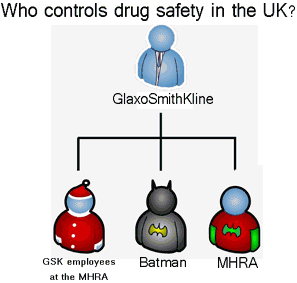
I have posted about the Right Honorable Andy Burnham previously:

I posted about the documented threats from the pharmaceutical industry to the Department of Health and Minister Burnham that they would withdraw from the UK if not allowed to get their own way [Link].

I posted about his praise for myself -- while he did nothing about the actual problems of research integrity I raised -- and while the MHRA, his government agency, attempted unsuccessfully to collude with others to obscure them [Link].

I posted about his rather interesting redefinition of the word transparency as it pertains to the UK drug regulator, the MHRA [Link].

batman and drug regulationBelow is the previous letter I wrote to him about a trivial but important aspect of transparency. He has not replied, no doubt because he probably doesn't read about the concerns raised by us the people, or my blog.

Anyway, here is that letter again. I'll send it by mail, and we will see if we can find out why we are not allowed to know anything at all about those who make decisions about our health and about honesty in drug regulation.

Despite the frivolity, there is a serious intent. It is clear that many patients have died as a result of a complete lack of regulatory transparency, gobbledegook regulation, and government failure to implement recommendations of the Health Select Committee report on the malfunction of the MHRA [Link].

To: Mr Andy Burnham
Minister of State, Department of Health
The House of Commons
UK


Redated 8 April 2007

Dear Minster Burnham

I wish to let you know about a state secret, and to seek your opinion about it.

I should declare a conflict of interest. I was born in a country where a state secret involved brutal policemen and barking dogs. Secrets which could cause doctors or patients to make incorrect decisions because they have been misled (in even the tiniest way) are not legitimate secrets.

I was therefore delighted to note your letter to Stewart Hosie MP (5/9/06) about the UK drug regulator (MHRA) in which you write: "it is important for the [drug] regulatory system and indeed the regulator to operate in as transparent a way as possible".

Your comments relate to urgent concerns raised by many including The Health Select Committee 18 months ago. MP Hosie seemed upset by the rest of your response, since you suggested no time-scale to implement any sort of plausible or honest review of the MHRA. Given your emphasis on transparency Minister, might we consider the legal and moral implications of a small state secret.

Let me paint a picture: Let us suppose you were a doctor Mr Burnham. You are standing there, syringe in hand, about to inject a potentially toxic drug into a patient. You do so in the knowledge that the MHRA, your government agency, has given a stamp of approval. It would be your fundamental right to know why the MHRA approved that drug before inflicting potential harm on a fellow human being. You might imagine you would have a right to know that the MHRA scrutinised evidence, what named persons were involved, and how precisely those persons were qualified. You might imagine that it should be your moral obligation to know these things.

So let us consider a small secret. Mr Ian Oulsnam is operations manager of the GCP inspectorate of the MHRA. This is a key role in this public body. He makes pronouncements about matters of science and medicine. He makes decisions which impact on life and death. He "investigates" matters upon which patients and doctors depend. He was involved in the MHRA self-"investigation" of the TGN1412 disaster. He makes public statements to the press on behalf of the MHRA. He received parliamentary instruction to conduct the fascinating "investigation" of P&G's conduct in Sheffield. He informed me that he "has a "relevant" university degree and a postgraduate degree in statistics.

I was thus surprised to note on the MHRA website a Freedom of Information request from Mr RC (MHRA FOI 06/185). The MHRA declined to convey a list of Mr Oulsnam's scientific publications [on Pubmed there are none]. The MHRA declined to say what university degrees Oulsnam has (if any). It was stated this is personal information. In the same spirit of transparency, the MHRA refused to sign this FOI response. When asked repeatedly to reply in writing, they posted an unsigned printout of their Emailed response to RC.

Oulsnam then made a scientifically incorrect and bizarre statement to the press about a drug. That statement was reproduced by yourself in correspondence to a MP. I therefore repeated the FOI request. I did not ask whether Oulsnam felt himself qualified to do his job. I simply wished to know what precise university degree(s) Oulsnam has (if any), and at which University. This was again refused on the basis that it is "personal information".

The REQUEST (FOI 06/303): "Mr Oulsnam stated to me that he has a degree, and that he also has postgraduate degree in statistics"..... "it is not clear whether I was misled. I request under the FOI a list of the university degrees and postgraduate university qualifications held by Mr Ian Oulsnam of the MHRA (and the names of awarding institutions)."

The MHRA RESPONSE (FOI 06/303): "The full details of Mr Oulsnam's qualifications are not released as this is considered to be personal information." [the absence of "full details" in MHRA language = "no details"]

Given Mr Oulsnam's job and public scientific pronouncements, this is not personal information. My refusal to convey my degree(s) would be a disciplinary offense. The DoH website urges patients to insist that surgeons, doctors, dentists, nurses and beauty therapists disclose their qualifications. Universities themselves consider degree awards to be public information (eg here, here, here, here, here). Even professional hypnotists are required to make their qualifications available upon request!

Question 1 Mr Burnham: Would YOU inject the drug Mr Burnham?

Question 2 Mr Burnham: Is this behaviour restricted to the MHRA?

A similar FOI request to the Water Inspectorate (DEFRA) requesting degrees of an official yielded a remarkably comprehensive response within 2 days listing all degrees, Universities, subjects taken and dates. I feel strangely confident when I drink water.

Yet the MHRA, which (unlike the Water Authority) uses an intermediary - doctors - to administer potential harm to other humans is as transparent as mud. In another instance the MHRA refused to provide any names of officials who had made decisions about Vioxx on the laughable basis that this might expose them to animal rights activists!

There will always be potential concerns about the training, common sense and conflicts of interest of public officials. But the point is that you, as that syringe-holding doctor are not even allowed to know.

Something is wrong Minister Burnham.

Yours Sincerely

Dr Aubrey Blumsohn
and if it matters .... MB BCh, PhD, MSc, BSc hons, MRCPath

Earlier|Later|Main Page

Sunday, March 18, 2007

It was Dr Purple in the Library - and things go bump in the night

The attempts by the good Dr Purple at Procter and Gamble to alter a scientific meeting abstract appears to be causing some hilarity across the blogsphere (See P&G Pharmaceuticals: how to deal with a public relations disaster [Link])

Pharmagossip [Link] posted the wonderful Deep Purple Smoke on the Water as a tribute to the good Dr Purple.


No matter what we get out of this
I know we'll never forget
Smoke on the water,
fire in the sky


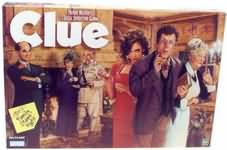
Procter and Gamble Dr PurpleSeveral other blog entries discussed the Waddington game Clue (Cluedo for those in the UK).
"it was Dr Purple in the library with the poison" [Link]
Ghosts on the sly: [Link]
Other stuff [Link]
For the good Dr Purple: [Link]
CL Psych posted an excellent discussion about Purple Haze [Link] and
Roy Poses over at the excellent Health Care Renewal included an old Scottish poem that tells it all (See : Actonel, Procter and Gamble, and Things That Go Bump in the Night)

From ghoulies and ghosties
And long-leggedy beasties
And things that go bump in the night
Good Lord, deliver us!


Earlier|Later|Main Page